
When a doctor says your loved one needs fluids or medicine through a vein, feelings are mixed. The good news is it can be done at home. Many families in Karachi feel relieved and nervous at the same time.
You are glad to avoid another hospital visit. But the thought of an iv drip at home raises questions. Is it safe? Who will handle it? What should we watch for? This guide gives you clear, simple answers so you can care for your patient with confidence.
In short: an iv drip at home is safe when a trained nurse handles the whole process and the family knows the warning signs. The nurse inserts the needle, sets the drip speed from the doctor’s prescription, and monitors the patient. Your role is comfort and watchfulness. The nurse inserts the needle, sets the drip speed from the doctor’s prescription, and monitors the patient. Your role is comfort and watchfulness, never touching the equipment.
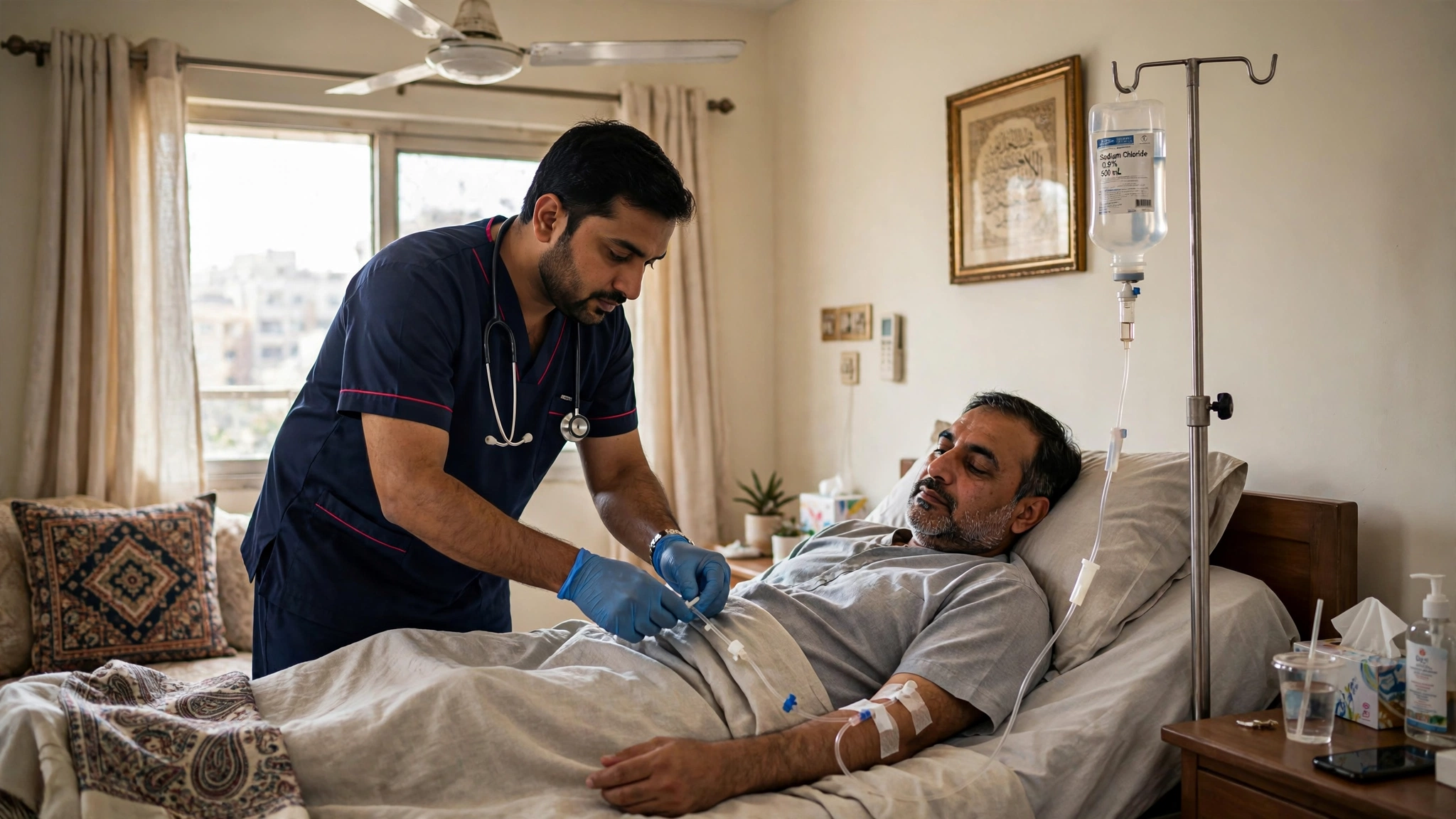
What an IV Drip at Home Means
An iv drip at home means a trained nurse visits your house. The nurse gives fluids or medicine slowly into a vein through a small tube. It is often used for dehydration, weakness, or prescribed treatment. The core safety rule is simple. Only a qualified nurse should insert, adjust, or remove the IV. Never a family member.
A drip is a slow, controlled process, and the nurse sets its speed from the doctor’s prescription. Your job as a family is to keep the patient comfortable. Watch for the warning signs described below.
When Doctors Recommend IV Drips at Home
Doctors recommend an IV drip at home for stable patients. These are patients who need fluids or medicines that cannot be given by mouth. Common situations include:
- Dehydration from fever, vomiting, or diarrhea
- Weakness and low energy after illness
- Prescribed medicines that must go directly into the vein
- Recovery support after hospital discharge
An IV drip must always be based on a doctor’s written advice. It must be handled by a trained female nurse at home or a qualified male nurse.
Why Only a Trained Nurse Should Handle It
Giving an IV drip looks simple from the outside, but every step needs training. Here is what a qualified nurse does that a family member cannot:
- Chooses the right vein and inserts the needle safely
- Sets the drip speed exactly as the doctor prescribed
- Watches for reactions during the drip
- Keeps the insertion site clean to prevent infection
- Stops and removes the drip properly when done
This is why home nursing exists. A male nurse in Karachi or female nurse has the skill to handle the drip from start to finish. Your calm, familiar presence helps the patient relax, while the medical handling stays in the nurse’s hands.
Warning Signs to Watch During the Drip
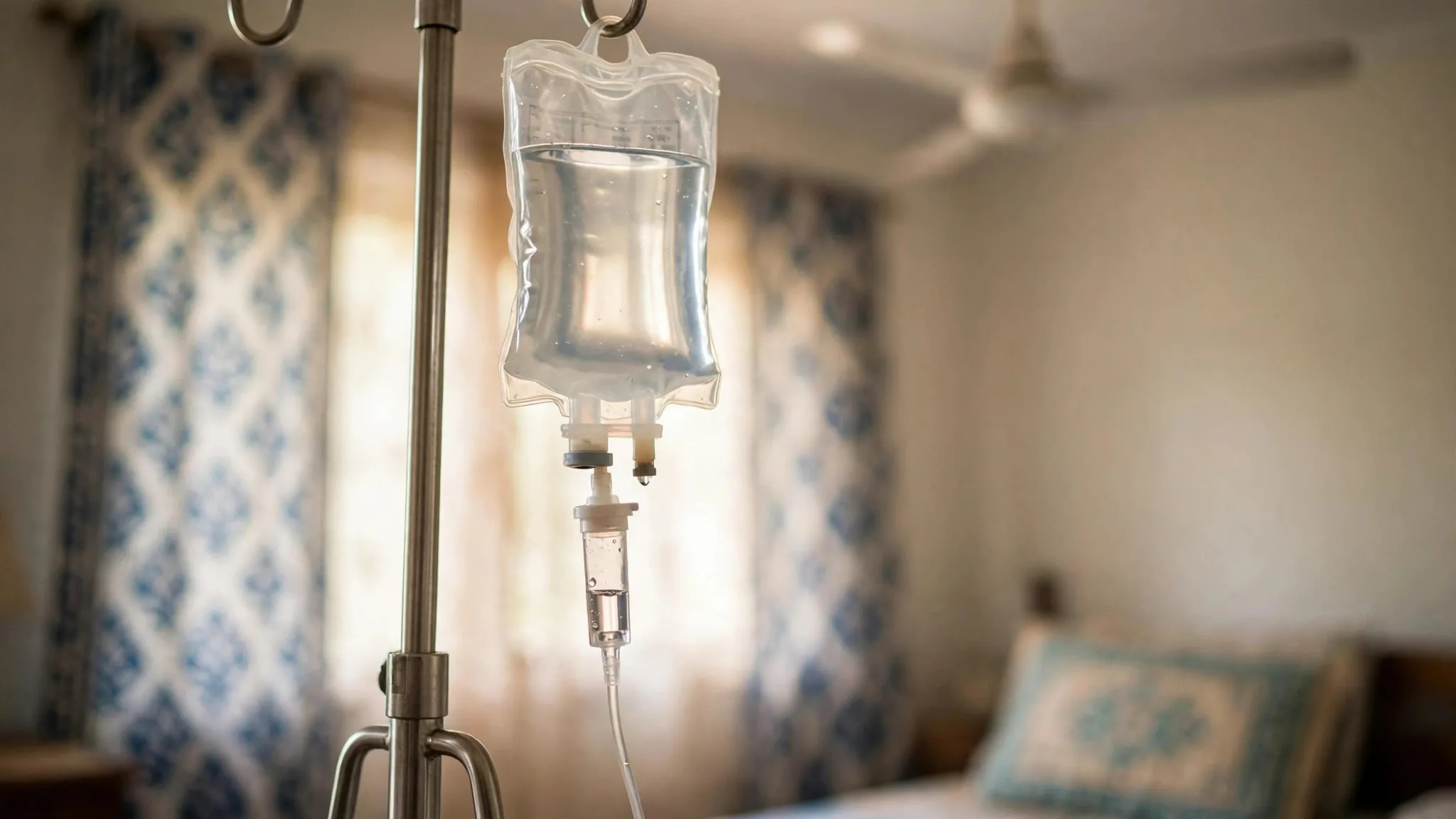
During and after the drip, call the nurse right away if you notice:
- Swelling, redness, or pain around the needle site
- Fluid leaking from the site or onto the bed
- The drip stops flowing or runs too fast
- Rash, itching, or difficulty breathing
- Sudden fever or chills during the drip
- The patient feels dizzy, uneasy, or unusually cold
Save the nurse’s phone number in your mobile before the drip starts. Acting quickly at the first warning sign is the safest thing you can do.
What Family Members Should Never Do
Your role is to support, not to handle the equipment. Please never do the following:
- Adjust the drip speed or the roller clamp
- Insert, pull, or reposition the needle yourself
- Disconnect the tubing or change the fluid bag
- Touch the needle site with unwashed hands
If something looks wrong, leave everything as it is and call the nurse. Trying to fix it yourself can make things worse.
Who does what during an IV drip at home
| Task | Who handles it |
|---|---|
| Inserting the needle and setting drip speed | Trained nurse only |
| Monitoring the patient during the drip | Trained nurse |
| Keeping the patient comfortable and calm | Family |
| Watching for warning signs | Family, then call the nurse |
| Adjusting flow or removing the needle | Trained nurse only, never family |
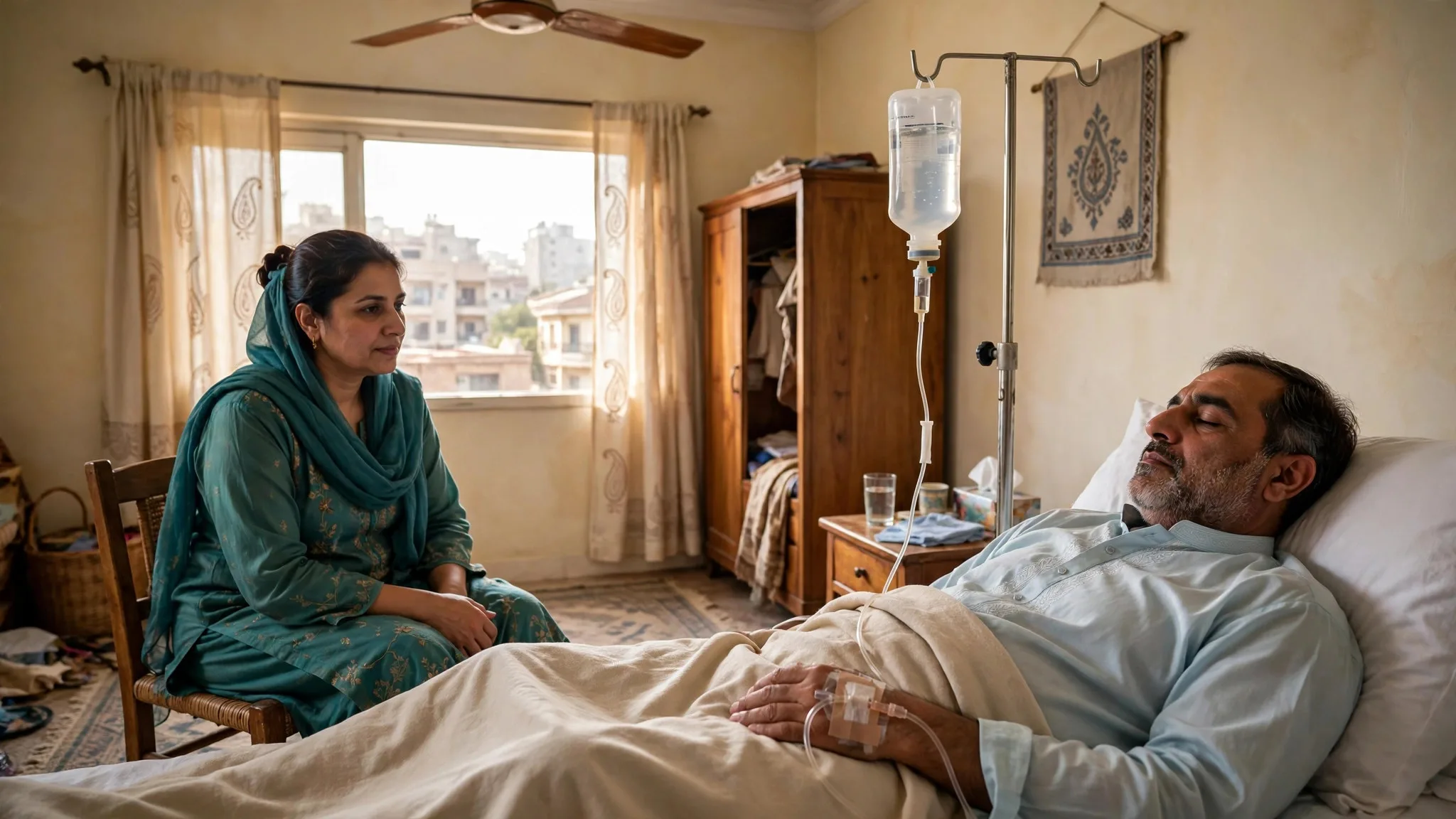
Why Families Trust Elijah Health Care Services
Families across Karachi trust Elijah Health Care Services because we send trained nurses to your home for IV drips and other medical care. Our nurses follow the doctor’s prescription, monitor the patient during the drip, and guide the family on what to watch for. For daily support, our patient attendants in Karachi and elderly care services can also help with comfort and companionship.
How to Book a Nurse for Your IV Drip
Booking is easy. Call us at 0346 2371014, message us on WhatsApp, or book an appointment online. Tell us what the doctor has advised, and we will arrange a qualified nurse for your home.
Frequently Asked Questions
Can a family member give an IV drip?
No. An IV drip should only be given by a trained nurse. Inserting a needle into a vein, setting the drip speed, and watching for reactions all need proper training. A family member trying to do it can cause infection or injury.
How long does an IV drip take?
It depends on the doctor’s prescription and the amount of fluid ordered. Some drips finish in an hour or two, others take longer. The nurse sets the correct speed and monitors the patient until it is done.
Does an IV drip hurt?
Most patients feel only a small pinch when the needle goes in, and no pain during the drip. If the patient feels pain, burning, or discomfort at the site, tell the nurse immediately.
How should we prepare for the nurse’s visit?
Keep a comfortable chair or bed ready with good light nearby. Have the doctor’s prescription and any reports within reach. Make sure the patient has used the washroom, and keep the room calm for the nurse to work.
Is an IV drip safe for elderly patients?
Yes, elderly patients commonly receive IV drips at home, especially for dehydration and weakness. Their veins need extra gentle handling, which is another reason a trained nurse is essential.
An iv drip at home is safe when a trained nurse handles it and the family knows the warning signs. If your doctor has advised a drip for your loved one, call 0346 2371014 or message us on WhatsApp. We will arrange qualified nursing care at your doorstep.
Note: This article is general guidance only and is not a substitute for your doctor’s advice. Always follow the prescription and instructions given by the treating doctor.