
Key Takeaways
- Patient monitor rental reduces upfront capital expenditure and aligns costs with usage.
- Flexible contracts allow hospitals to scale monitoring capacity during surges or special procedures.
- Maintenance, calibration, and upgrades are typically included, minimizing downtime.
- Rental providers offer latest technology, ensuring compliance with evolving clinical standards.
- Choosing a reputable vendor involves evaluating service response times, inventory depth, and contract transparency.
Healthcare administrators face constant pressure to deliver high‑quality care while controlling budgets. Patient monitor rental emerges as a strategic solution that balances clinical needs with financial prudence. By opting for a rental model, facilities can access advanced monitoring equipment without the burden of ownership, depreciation, or unexpected repair costs.
The Growing Demand for Flexible Patient Monitoring Solutions
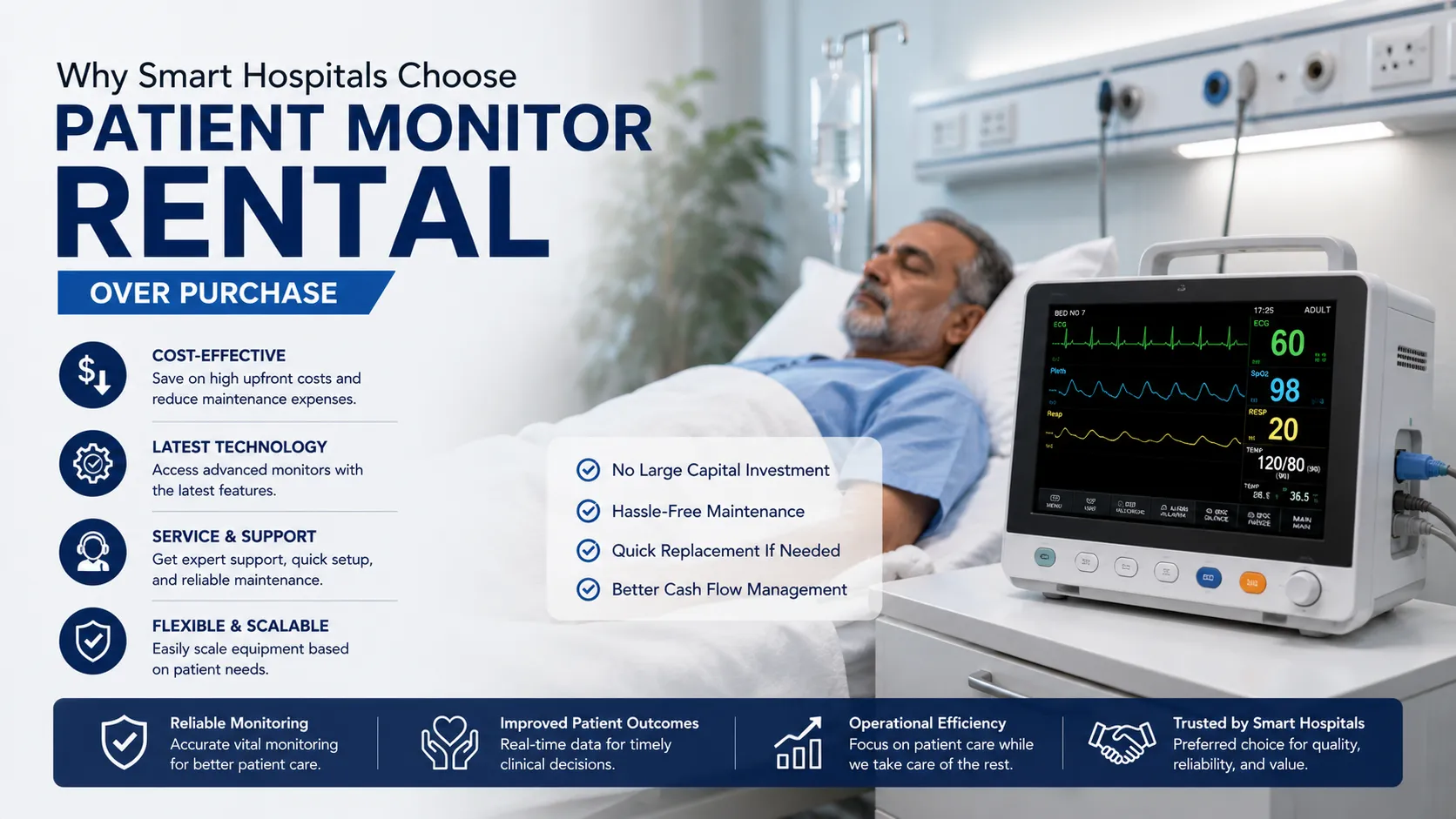
Hospitals today experience fluctuating patient volumes, seasonal outbreaks, and elective procedure backlogs. These dynamics create periods where additional bedside monitors are essential, yet purchasing extra units for short‑term spikes proves wasteful. Consequently, many institutions turn to rental agreements that provide the exact number of devices required, precisely when they are needed.
Furthermore, technological advancements in patient monitoring occur at a rapid pace. New features such as wireless connectivity, integrated analytics, and AI‑driven alarms appear frequently. Renting enables care teams to stay current without committing to costly upgrades every few years.
Patient Monitor Rental: How It Works
The rental process begins with a needs assessment conducted by the provider’s clinical specialists. They evaluate the types of monitors required—such as multi‑parameter, cardiac output, or fetal units and determine the optimal quantity based on projected patient acuity.
Next, the provider delivers, installs, and configures the equipment at the facility. Throughout the rental period, routine maintenance, calibration, and software updates are performed according to manufacturer guidelines. Should a malfunction occur, a replacement unit is typically supplied within a guaranteed response time, often under four hours.
At the end of the contract, the hospital may return the devices, renew the agreement, or purchase the equipment at a pre‑negotiated price. This flexibility ensures that financial commitments align with actual utilization patterns.
Key Benefits of Renting Patient Monitors
Cost predictability stands out as a primary advantage. Rental fees are usually structured as a monthly or per‑day rate, transforming a large capital outlay into manageable operating expenses. This shift improves cash flow and simplifies budgeting for finance teams.
Additionally, rental agreements often include comprehensive service packages. Providers handle preventive maintenance, troubleshooting, and user training, which reduces the workload on biomedical engineering staff. Consequently, clinical personnel can focus more on patient care rather than equipment logistics.
Another benefit is risk mitigation. Ownership exposes hospitals to technology obsolescence; renting transfers that risk to the vendor. When newer models become available, the facility can upgrade seamlessly at contract renewal.
When to Consider Patient Monitor Rental
Facilities experiencing seasonal influxes—such as flu season or summer trauma spikes—find rental ideal for temporary capacity expansion. Similarly, hospitals launching new specialty units, like a stroke center or a neonatal ICU, may rent monitors while awaiting permanent installations.
Elective surgery backlogs also create short‑term demand surges. Renting allows surgical suites to equip additional recovery beds without delaying procedures. Moreover, organizations participating in clinical trials or research studies often require specialized monitoring gear for limited durations, making rental a cost‑effective choice.
Choosing the Right Rental Provider
Selecting a vendor involves more than comparing price sheets. Decision‑makers should assess the provider’s inventory depth, ensuring they stock the specific monitor models needed for various care environments. Equally important is the vendor’s service reputation; rapid response times and certified technicians directly impact uptime.
Transparency in contract terms is crucial. Look for clear definitions of maintenance coverage, upgrade options, and early termination penalties. A reputable supplier will also offer training resources and 24/7 technical support hotlines.
Finally, consider the provider’s compliance with regulatory standards. Equipment should meet FDA, CE, or local health authority requirements, and the vendor must maintain proper documentation for audits.
Real‑World Examples and Case Studies
A mid‑sized community hospital in the Midwest faced a sudden increase in COVID‑19 admissions. By activating a patient monitor rental agreement, they added 20 multi‑parameter units within 24 hours, avoiding patient diversion and maintaining quality of care.
In another case, a children’s hospital renovated its pediatric ICU. Instead of purchasing new monitors outright, they rented the latest models during the six‑month construction phase. This approach allowed continuous monitoring without interruption, and the hospital later transitioned to a purchase plan at a discounted rate.
These examples illustrate how rental strategies provide agility, financial efficiency, and uninterrupted clinical service across diverse scenarios.
Future Trends in Patient Monitor Rental
The rental market is evolving alongside digital health innovations. Providers are beginning to offer “smart rental” platforms that integrate device data with hospital analytics dashboards, enabling real‑time utilization tracking and predictive maintenance.
Additionally, sustainability concerns are prompting vendors to refurbish and redeploy equipment, extending product lifecycles and reducing electronic waste. Hospitals that prioritize green initiatives may find rental partners with strong circular‑economy practices particularly attractive.
As value‑based care models gain traction, outcome‑based rental contracts—where fees are tied to performance metrics such as alarm fatigue reduction or early warning scores—are likely to emerge, further aligning financial incentives with patient safety goals.
Conclusion
Patient monitor rental offers a compelling alternative to outright purchase, delivering flexibility, cost control, and access to cutting‑edge technology. By understanding the operational mechanics, recognizing the ideal scenarios for adoption, and selecting a dependable provider, healthcare organizations can optimize both their budgets and their capacity to deliver exceptional care.
Embracing this model positions hospitals to respond swiftly to changing demands while maintaining the highest standards of patient safety.
Ready to Optimize Your Monitoring Strategy?
Contact our team today for a customized patient monitor rental plan that fits your facility’s needs and budget.
What types of patient monitors are typically available for rental?
Rental inventories usually include multi‑parameter monitors, cardiac output systems, fetal and maternal units, cerebral oximetry devices, and specialized telemetry platforms. Providers can also supply bedside monitors with integrated capnography, EEG, or invasive pressure modules based on clinical requirements.
How does maintenance and calibration work in a rental agreement?
Most rental contracts cover preventive maintenance, calibration, and software updates at no extra cost. The vendor schedules regular service visits, performs required checks according to manufacturer standards, and provides loaner units if a device needs repair. This ensures continuous compliance and minimizes downtime.
Can I upgrade to newer monitor models during the rental period?
Yes, many providers offer upgrade options either mid‑term or at contract renewal. Depending on the agreement, you may exchange existing units for newer models with additional features, often for a modest fee or as part of a refreshed service package.
What factors should I consider when comparing rental vendors?
Key considerations include inventory availability, response time for service calls, transparency of contract terms, inclusion of maintenance and training, compliance with regulatory standards, and the provider’s reputation for reliability. Evaluating these aspects helps ensure a smooth, cost‑effective rental experience.