
After surgery or an injury, the wound needs clean, careful dressing until it heals. Many families in Karachi now manage this at home instead of making tiring hospital trips every day. This guide to wound dressing at home explains the clean technique step by step. It covers what supplies you need. And, just as important, it explains when you should not do it yourself and call a nurse instead.
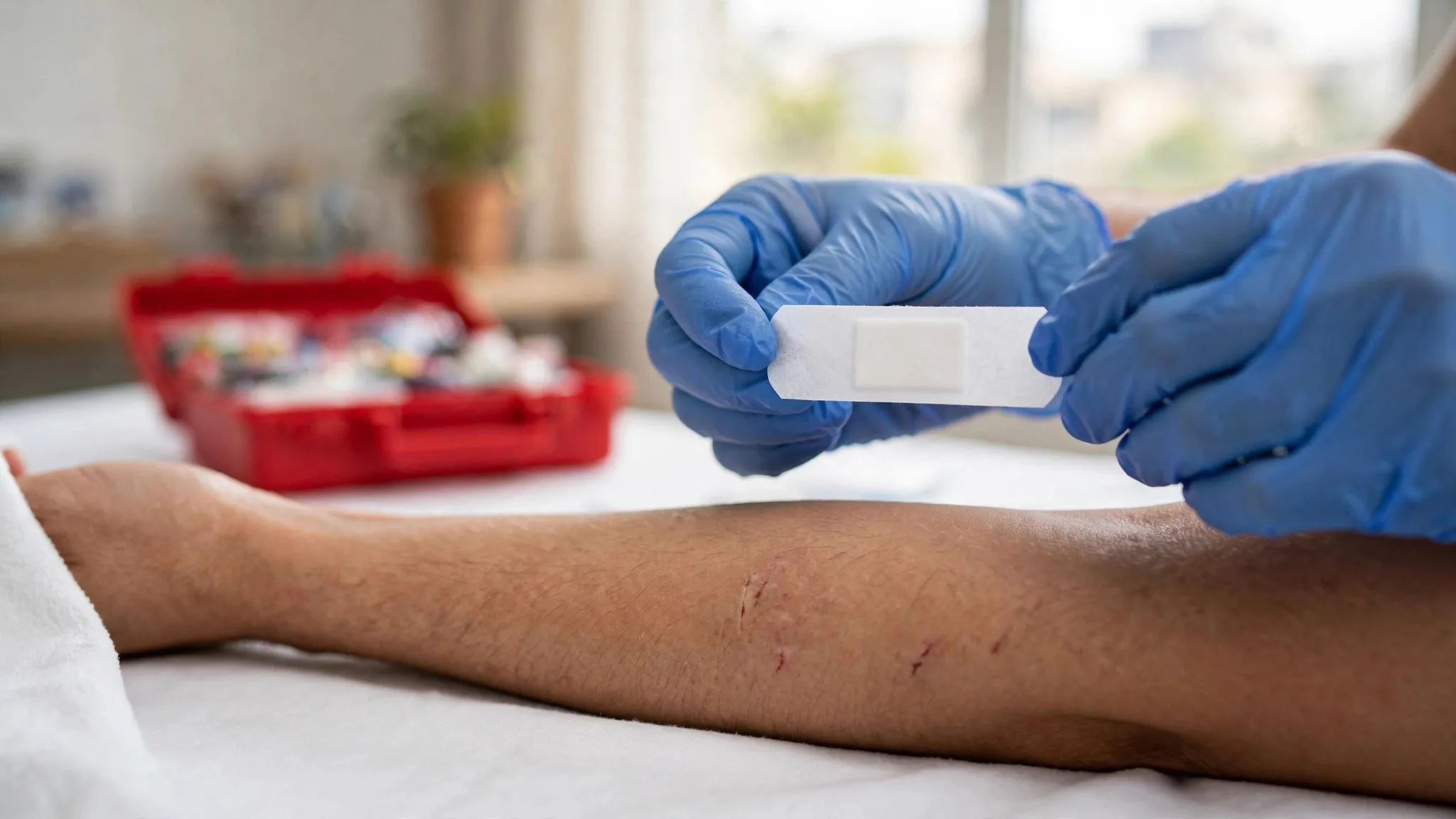
In short: wound dressing at home means cleaning the wound gently, applying any prescribed ointment, and covering it with a fresh sterile dressing using clean technique. The essentials are simple. Wash your hands thoroughly. Never touch the wound or the sterile side of the dressing with bare fingers. Use clean materials each time. Keep the dressing dry and snug, but not tight. Call your nurse or doctor immediately for spreading redness, increasing pain, swelling, foul smell, or fever. Also call for any wound that is deep, heavily bleeding, or not improving.
What You Need Before You Start
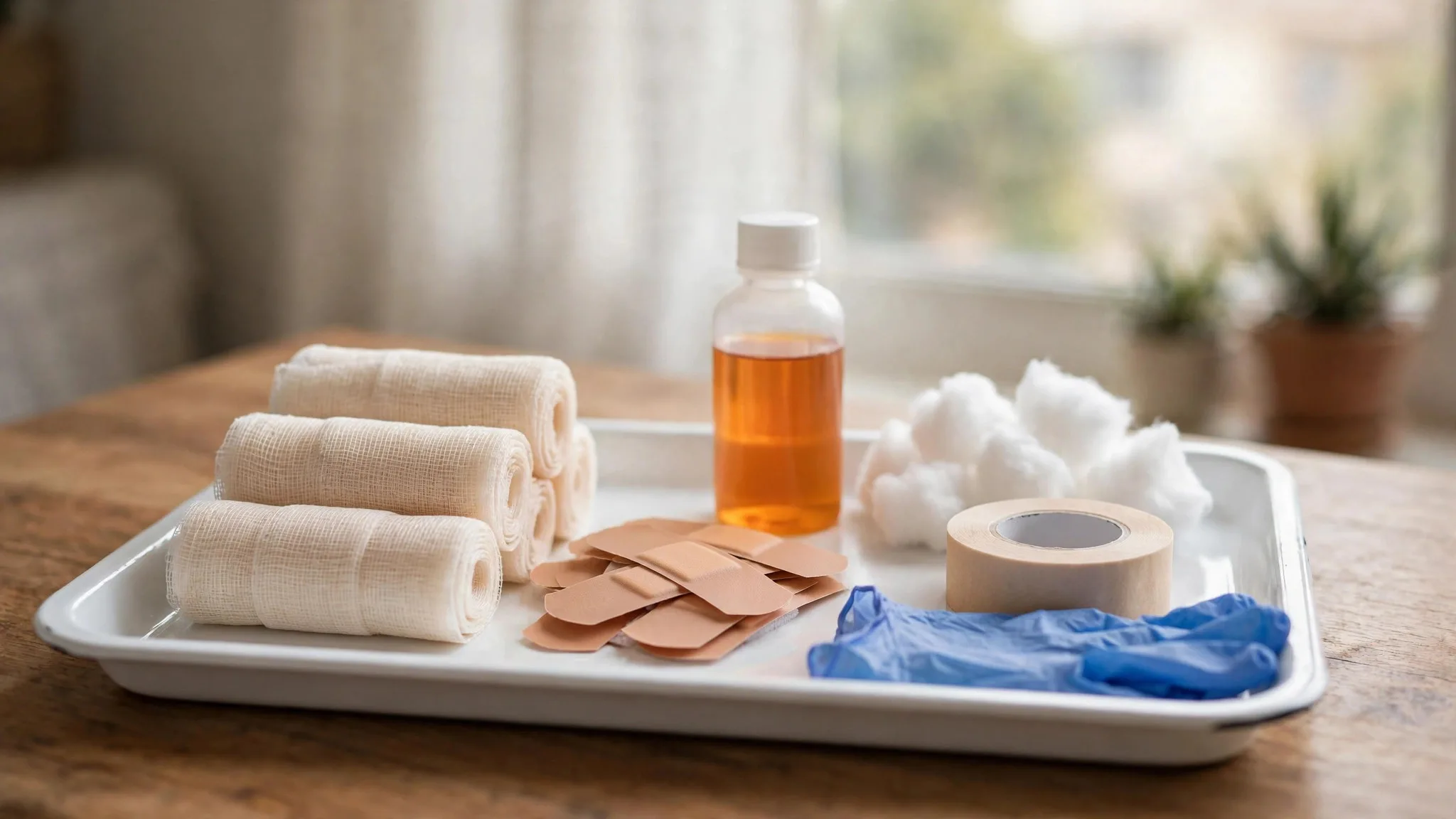
Ask your nurse or pharmacist to prepare a small dressing kit so everything is ready at home:
- Sterile gauze pieces and cotton
- Medical tape or bandage roll
- Antiseptic solution as prescribed (do not improvise with home remedies)
- Prescribed ointment or cream, if any
- Clean disposable gloves
- A clean tray or plate to keep materials off the bed
- A small bag for safe disposal of used dressings
Keep the kit in one clean, dry place, and check expiry dates on sterile packs.
Wound Dressing at Home: Step-by-Step Clean Technique
- 1. Wash your hands with soap for at least 20 seconds and dry them with a clean towel. Put on disposable gloves.
- 2. Prepare your materials on the clean tray: open the gauze packs and keep the sterile sides facing up, untouched.
- 3. Remove the old dressing gently. If it sticks, moisten it slightly with clean saline or water as your nurse showed you. Never pull hard.
- 4. Look at the wound before touching it. Note the color, any discharge, smell, and whether redness is spreading. This observation matters, report changes to your nurse.
- 5. Clean the wound gently with the prescribed solution, wiping from the center outward, using each gauze piece once. Do not scrub.
- 6. Apply prescribed ointment if ordered, without touching the wound with your fingers.
- 7. Cover with a fresh sterile dressing, handling only the outer edges. Secure with tape or bandage, snug but not tight enough to cut circulation.
- 8. Dispose safely of the old dressing in a sealed bag, remove gloves, and wash your hands again.
Most simple wounds need dressing once a day, or as often as your doctor advised. Write down the date and what you observed each time.
The Rules That Prevent Infection
Wound infection almost always comes from contaminated hands or materials. The golden rule: nothing that touches the wound should have touched anything else first.
Keep the dressing dry. Cover it with a plastic sheet during sponge baths, and if it gets wet accidentally, change it. A damp dressing is an invitation to germs. Also keep the patient’s general hygiene good and bedding clean, because overall cleanliness supports wound healing.
Clean technique: correct practice vs common mistakes
| Correct practice | Common mistake |
|---|---|
| Wash hands before and after the dressing | Touching the wound with bare fingers |
| Use each gauze piece only once | Reusing gauze or cotton |
| Change a wet dressing immediately | Leaving a damp dressing on |
| Follow the doctor’s dressing schedule | Skipping changes or trying home remedies |
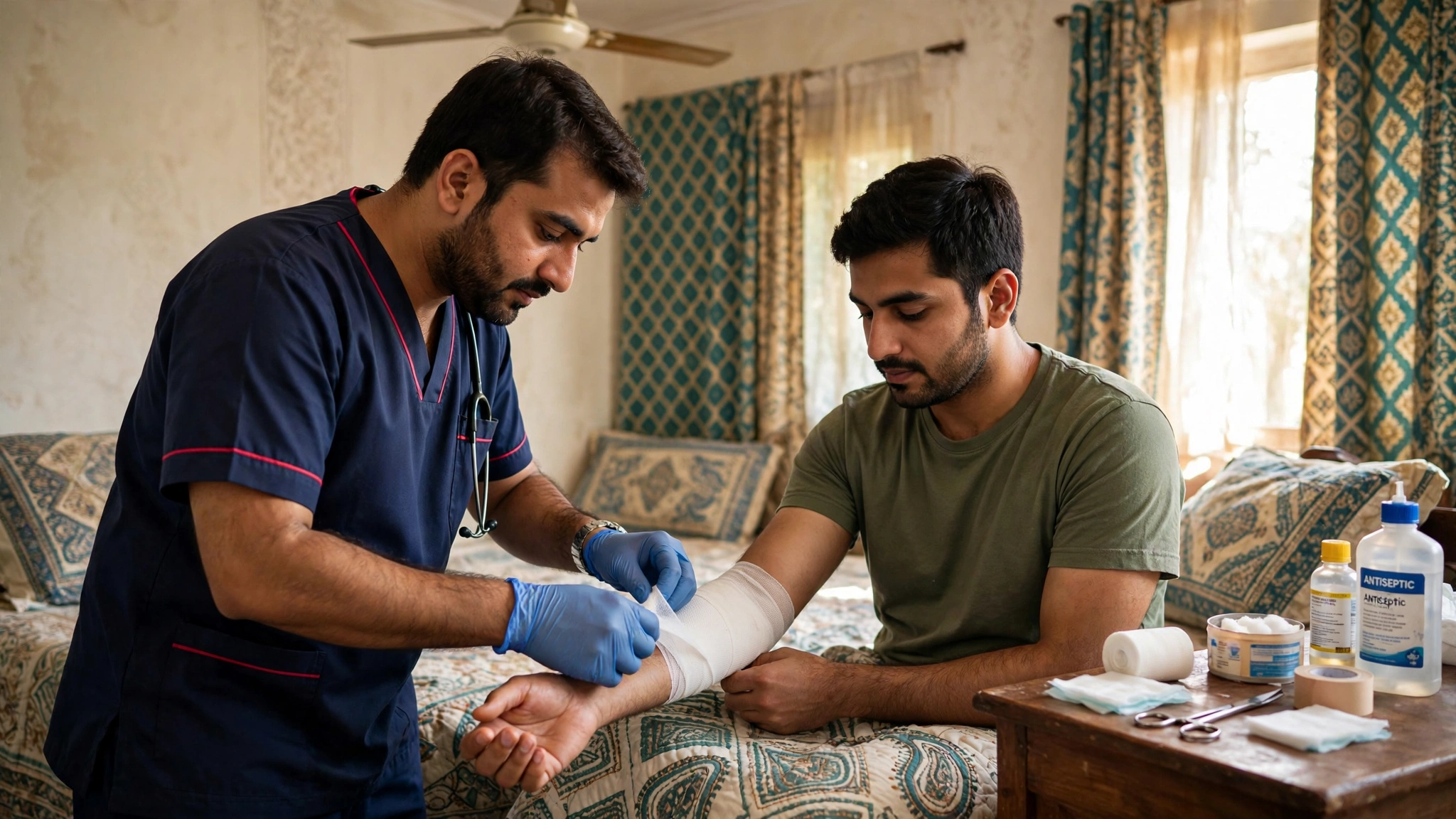
When NOT to Do It Yourself: Call a Nurse
Home dressing is for simple, healing wounds under professional guidance. Call a nurse or doctor instead of handling it yourself when:
- The wound is deep, wide, or has heavy discharge
- There is increasing pain, swelling, or spreading redness
- You notice a foul smell, pus, or fever
- Bleeding does not stop with gentle pressure
- The wound is from a diabetic foot ulcer, pressure sore, or burn, these need professional care
- You were never trained for this specific wound
There is no shame in calling for help. A trained male nurse or female nurse at home can do sterile dressings properly, spot early infection, and adjust the care plan. For post-surgical patients, our nurses often combine dressing with overall recovery support, and our patient attendant service helps with daily needs while the wound heals.
Helping the Wound Heal Faster
Dressing is only half the story. Good nutrition helps wounds close: protein, vitamin C, and enough fluids, as the doctor or dietitian advises. For diabetic patients, blood sugar control is critical, high sugar slows healing dramatically, so follow the diabetes plan strictly.
How to Book Wound Care with Elijah
If your loved one needs regular dressings at home, call Elijah Health Care Services at 0346 2371014. Our nurses perform sterile wound dressings at home across Karachi, train your family where appropriate, and monitor healing at every visit. You can also message WhatsApp or book an appointment online.
Frequently Asked Questions
How often should a wound dressing be changed?
Follow your doctor’s advice, commonly once daily for healing surgical wounds. Change it sooner if it gets wet, dirty, or loose. Do not leave a soiled dressing on until tomorrow just to avoid changing it.
Can I use home remedies like turmeric on the wound?
Please do not. Home remedies can introduce infection and interfere with prescribed treatment. Use only what the doctor or nurse prescribed. Traditional remedies have their place, but an open wound is not it.
What are the first signs of wound infection?
Increasing pain, spreading redness, swelling, warmth around the wound, pus or bad smell, and fever. If you see any of these, call your nurse or doctor the same day. Early treatment keeps small infections from becoming serious.
Should the wound be kept covered or open to air?
Follow your doctor’s instruction for your specific wound. Most healing wounds do better covered with a clean dressing, which keeps them moist and protected. Do not uncover a wound just because someone says “air heals faster.”
Can an attendant do the dressing instead of a nurse?
Simple dressing changes can be taught to a careful family member or attendant for uncomplicated wounds. But the first dressings and any complex wounds should be handled by a trained nurse. When in doubt, choose the nurse.
Final Thoughts
Wound dressing at home is a skill any careful family member can learn, but it demands respect for cleanliness and honesty about your limits. Clean hands, sterile materials, gentle handling, and quick calls when something looks wrong, that is the entire method. And for anything beyond a simple healing wound, Elijah’s nurses are ready to take over, so your loved one heals safely and you stay worry-free.
Note: This guide shares general information for families. Wound care must follow your doctor’s and nurse’s instructions for your specific case. Always consult the treating doctor for medical decisions.