
When a patient cannot eat or swallow safely, doctors often recommend feeding through a thin tube that goes through the nose into the stomach. Hearing this for the first time is scary for most families. This guide on NG tube feeding at home explains what it is and how daily feeds work. It shows how to keep the patient safe and comfortable, in simple words, without medical jargon.

In short: NG tube feeding at home means giving liquid nutrition, water, and prescribed medicines through a nasogastric tube when the patient cannot swallow safely. A trained nurse sets up the tube and teaches the family the daily routine. This covers hand washing, correct patient positioning, slow feeding, and flushing the tube with water. The two golden rules are simple. Never feed a patient who is lying flat. And call your nurse or doctor immediately if there is coughing, vomiting, or breathing difficulty during a feed.
What Is an NG Tube, Exactly?
NG stands for nasogastric: a soft, thin tube that passes through the nose, down the throat, and into the stomach. It is used after strokes, in throat or mouth surgeries, for unconscious patients, and for elderly patients whose swallowing has become unsafe. Only a trained nurse or doctor should insert or reposition the tube. Family members handle the daily feeding, but tube placement itself is always a professional’s job.
The tube is usually changed every few weeks by the nurse, and its position is checked before every single feed. This check is the most important safety step, and we explain it below.
NG Tube Feeding at Home: The Daily Routine
Here is the routine a nurse will teach you. Follow it in the same order every time:
- 1. Wash your hands thoroughly with soap, and keep the feeding area clean.
- 2. Sit the patient up at 45 degrees or higher, supported by pillows. Never feed someone lying flat. Keep them upright for at least 30 to 45 minutes after the feed.
- 3. Check tube position the way your nurse taught you, before every feed. If you are ever unsure the tube is in place, stop and call the nurse. Do not guess.
- 4. Feed slowly. Whether using a syringe or a feeding bag, let the feed flow gently. Rushing causes nausea and vomiting.
- 5. Flush with water before and after the feed and after medicines, exactly as the nurse instructed. This keeps the tube from blocking.
- 6. Keep the nose and mouth clean. Wipe the nostril area gently each day, offer mouth care with a damp sponge, and keep lips moist.
Feeds are usually given several times a day in fixed amounts prescribed by the doctor or dietitian.
NG feeding: do this, not that
| Do | Don’t |
|---|---|
| Keep the patient upright during and after feeds | Never feed a patient who is lying flat |
| Check tube position before every feed | Never guess if you are unsure, call the nurse |
| Flush the tube with water after feeds and medicines | Don’t let mixed feed sit out for hours |
| Wash hands before touching any equipment | Don’t try to push a displaced tube back in |
Hygiene: The Part Families Underestimate
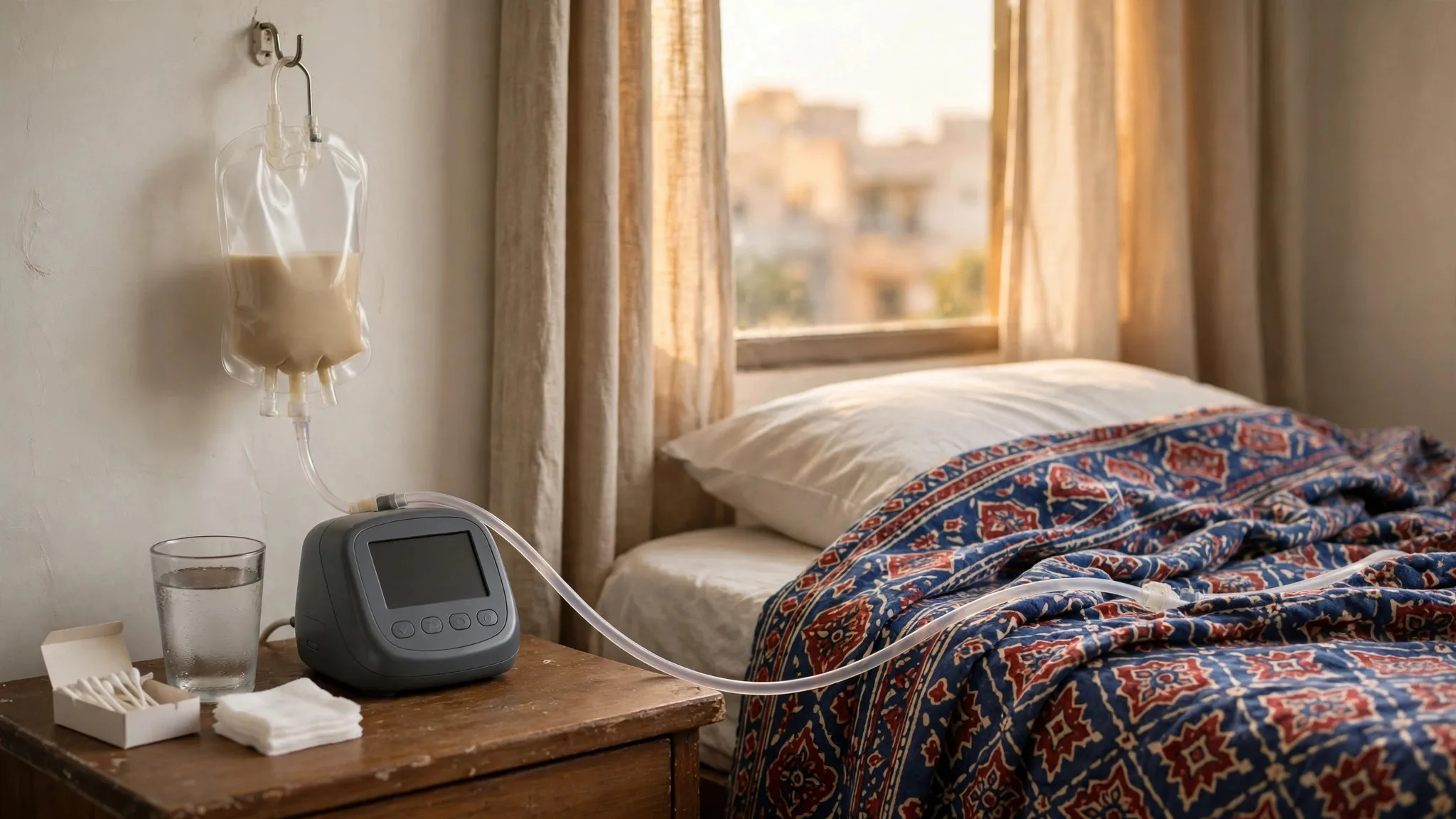
Infection is the biggest avoidable risk in tube feeding. Wash hands before touching the tube, the syringe, or the feed. Prepare each feed fresh, and do not keep mixed feed sitting at room temperature for hours. Wash the syringe and feeding equipment after every use and let them air dry.
Warning Signs: When to Stop and Call
Stop the feed and call your nurse or doctor right away if you notice any of these:
- Coughing, choking, or difficulty breathing during or after a feed
- Vomiting
- A swollen or painful abdomen
- Fever
- The tube looking displaced
Do not try to push a displaced tube back in yourself. Keep the patient upright, stay calm, and call for professional help.
Why a Trained Nurse Makes All the Difference
Many families start NG feeding feeling nervous, and that is completely normal. Having a trained male nurse or female nurse at home for the first several days changes everything. The nurse inserts the tube correctly, trains your family hands-on, watches the first feeds, and stays reachable for questions. Most families feel confident within a week.
For patients who need long-term tube feeding, a regular nursing visit schedule keeps everything on track: tube changes, weight checks, and early spotting of problems. If your loved one also needs help with bathing, mobility, or companionship, a patient attendant can support the family alongside the nurse.
How to Book Nursing Support with Elijah
If your doctor has advised NG tube feeding, call Elijah Health Care Services at 0346 2371014 before the patient comes home from hospital. Our nurse will handle tube insertion, set up the feeding routine, and train your family step by step. You can also message WhatsApp or book an appointment online. We serve all of Karachi, including DHA, Clifton, Gulshan, and Bahria Town.

Frequently Asked Questions
Is NG tube feeding painful for the patient?
Insertion can cause brief discomfort, which is why a trained nurse does it gently and quickly. Once in place, most patients get used to the tube within a day or two. If the patient complains of ongoing pain, tell the nurse, the tube may need repositioning.
Can the patient eat anything by mouth with an NG tube?
Only if the doctor allows it. Many patients are kept “nil by mouth” because swallowing is unsafe. Never offer food or water by mouth without the doctor’s clear permission, even if the patient asks.
How often is the tube changed?
Typically every few weeks, depending on the tube type and the patient’s condition. Your nurse will keep track of the schedule and change it at home, so you do not need hospital visits for this.
What if the tube gets blocked?
First, do not force anything through it. Try flushing gently with warm water if your nurse has shown you how. If it stays blocked, call the nurse. Regular flushing after every feed and medicine prevents most blockages.
Can we travel with a patient who has an NG tube?
Short trips are possible with planning: carry feeds, syringes, water, and the nurse’s phone number. For longer journeys, discuss the plan with the doctor and nurse first.
Final Thoughts
NG tube feeding at home sounds intimidating on day one, but hundreds of Karachi families manage it safely every day with the right training and support. The formula is simple: a trained nurse for setup and supervision, careful hygiene, correct positioning, and quick calls when something looks wrong. If your family is facing this, you do not have to figure it out alone. Call Elijah, and we will walk beside you from the very first feed.
Note: This guide shares general information for family caregivers. Tube insertion, feed plans, and medicines must follow your doctor’s and nurse’s instructions. Always consult the treating doctor for medical decisions.