
Watching your elderly parent wince getting out of bed is painful for the whole family. Many older people in Clifton stop going for treatment. The trip to a clinic means stairs, traffic, and long waits in crowded rooms. With physiotherapy at home Clifton Karachi, a trained physiotherapist comes to you. They treat your loved one in their own room, at their own pace. It is a gentle, personal way to manage back pain, arthritis, and recovery after a fracture, without leaving home.
Physiotherapy at home Clifton Karachi means a qualified physiotherapist visits your home in Clifton. They treat pain, stiffness, and mobility problems. Each visit includes an assessment, hands-on therapy, and guided exercises suited to the patient. The family stays involved throughout.
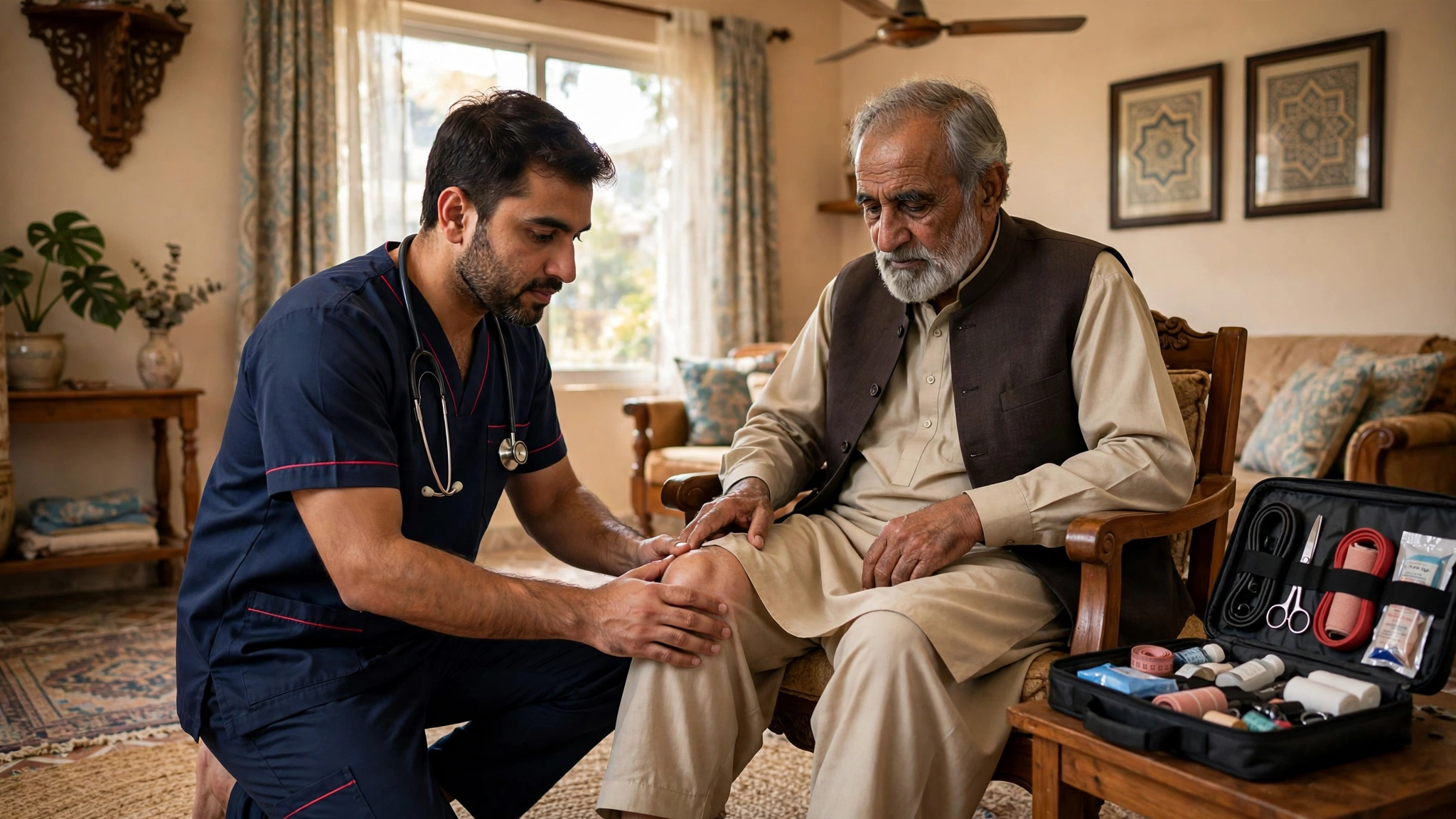
Physiotherapy at Home Clifton Karachi: How a Session Works
Many families ask what actually happens when the physiotherapist arrives. A home session usually follows these steps, adjusted to the patient’s condition on the day.
- A friendly check-in. The physiotherapist asks about pain since the last visit and observes how the patient is moving.
- Gentle warm-up. Simple seated or lying movements loosen stiff joints. For elderly patients with arthritis, this slow start matters because cold joints need time before deeper work begins.
- Hands-on therapy and guided exercises. The therapist helps with stretches, joint movements, and muscle strengthening. Back pain sessions may include posture training and gentle spinal exercises. Arthritis work focuses on smooth joint movement and supporting muscles.
- Walking and daily movement practice. The therapist practises real-life movements. This includes standing up from a chair, walking with a walker or stick, and managing the bathroom safely. This helps elderly patients regain independence.
- A plan for the family. Before leaving, the therapist shows simple exercises. The patient and a family member repeat these between visits. Home practice is a big part of why home physiotherapy works.
Back Pain and Arthritis Care for the Elderly
Back pain and arthritis are among the most common reasons elderly people in Clifton need physiotherapy. Over the years, joints wear down, muscles weaken, and long hours of sitting take their toll. Slowly, the pain limits walking, sleeping, and getting dressed.
At home, the therapist sees the patient’s real life. The bed they sleep in, the chair they sit in all day, the bathroom they use. Our physiotherapy home service in Karachi follows the same personal approach across the city.
Arthritis sessions reduce stiffness, keep joints flexible, and strengthen supporting muscles. Back pain work centres on posture and gentle spinal exercises. If your loved one also needs help with daily routines, our elderly care services can support the physiotherapy plan.
Post-Fracture Rehab at Home
A hip, wrist, or ankle fracture in old age can shake an elderly person’s confidence. Muscles weaken quickly when a limb is not used, and joints stiffen. Starting rehabilitation at the right time helps recovery.
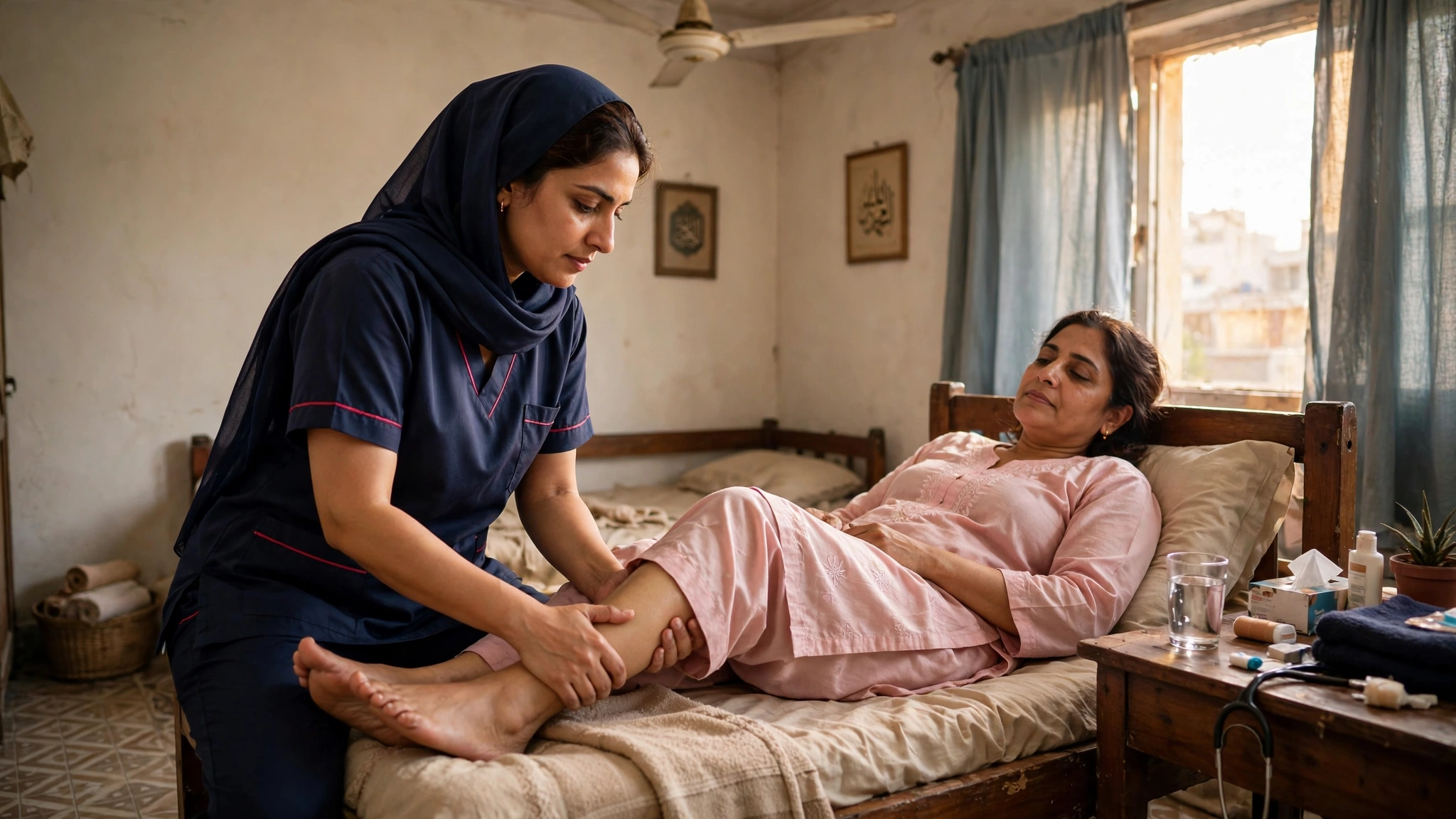
At home, the physiotherapist rebuilds strength step by step, exactly as the doctor has advised. It starts with gentle range-of-motion work, then simple strengthening, then safe walking practice with a walker or support. The patient avoids a difficult clinic journey while still fragile. Some patients spend most of their time in bed during early recovery. For them, a hospital bed rental can make sessions and daily rest far more comfortable.
What Happens in the First Assessment
The first visit is mostly about understanding the patient. The physiotherapist talks with the patient and family about the pain or injury. They look at any reports the doctor has shared. They ask about medicines and other health conditions. Then comes a gentle physical check: posture, joint movement, muscle strength, and how the patient walks, sits, and stands. Nothing is rushed, and nothing painful is forced. By the end of the visit, the family knows what each session will include.
First Visit vs Follow-Up Visits
| Point of comparison | First Visit (Assessment) | Follow-Up Visits |
|---|---|---|
| Main purpose | Understand the patient and plan | Carry out the plan |
| What happens | Talk and gentle physical check | Warm-up, exercises, walking practice |
| Family role | Share history and reports | Learn and repeat exercises |
| Outcome | Clear goals and session plan | Steady progress each week |
How to prepare for the first visit:
- Keep the doctor’s reports and discharge summary ready
- Make a list of current medicines
- Dress the patient in loose, comfortable clothes
- Keep a sturdy chair and some clear floor space ready
Why Clifton Families Prefer Home Physio
Clifton families choose home physiotherapy for practical reasons. There is no travel through traffic. The patient stays in familiar surroundings. Family members can watch the sessions, learn the exercises, and ask questions directly.
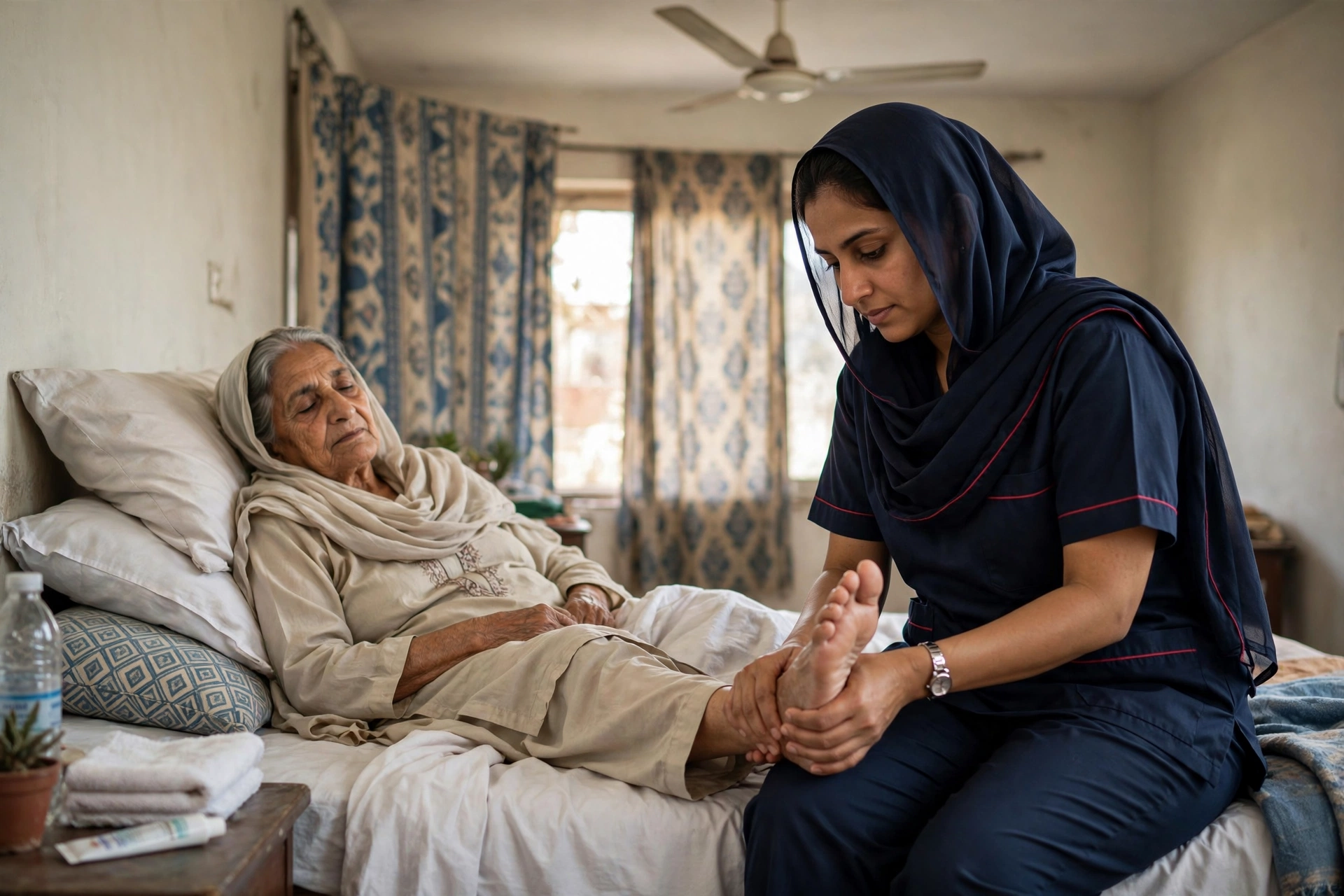
Some patients need help with bathing, meals, and movement through the day. Combining physiotherapy with a patient attendant in Karachi gives the family complete support at home.
How to Book
Booking a session is simple. Call us at 0346 2371014, message us on WhatsApp, or book an appointment through our website. Share your preferred timings and your preference for a male or female physiotherapist.
Please note: this article shares general information about home care services. It is not medical advice. For health decisions about your loved one, please talk to your doctor.
Here are answers to the questions Clifton families ask us most often:
How many sessions will my parent need?
It depends on the condition and how the patient responds. Many elderly patients with back pain or arthritis start feeling better within a few weeks of regular sessions.
Can physiotherapy help with arthritis pain?
Yes, physiotherapy is widely used to manage arthritis pain. It cannot remove arthritis, but guided exercises keep joints flexible, strengthen surrounding muscles, and reduce stiffness. Many older patients find walking and stairs easier with regular sessions.
Is home physiotherapy safe after a fracture?
Yes, as long as the treating doctor has allowed movement. The physiotherapist works within your doctor’s limits and builds strength gently as the body is ready. Always share your doctor’s instructions with the therapist on the first visit.
Do we need to buy any equipment for home sessions?
Usually no special equipment is needed. The physiotherapist brings what is needed. Exercises are designed around furniture you already have, like a sturdy chair or a wall for support.
Can we request a male or female physiotherapist?
Yes. Tell us your preference when you book, and we will arrange a physiotherapist your family is comfortable with.
If your parent or grandparent in Clifton lives with back pain or arthritis, we can help. After a fracture too, physiotherapy at home Clifton Karachi brings the care to your doorstep. Call 0346 2371014 or message us on WhatsApp to book an appointment today. This guide shares general information only; please follow your doctor’s advice for your loved one’s specific needs.