
The surgery went well. The doctor says the patient can go home. Suddenly a new worry replaces the old one: how will we manage healing at home? Hospital discharge papers are full of instructions, but real life needs real help. This guide to post surgery care at home Karachi families can follow covers everything. It takes you from the first day home to full healing.
What is post-surgery care at home? Post-surgery care at home is medical and daily support. The patient receives it after hospital discharge. It happens while the patient recovers in their own house. In Karachi, it typically includes wound dressing and stitch care. It also covers medicines on schedule, and help with bathing and mobility. It also covers physiotherapy exercises and monitoring for warning signs. Nurses, attendants, or family members guided by professionals provide this care.
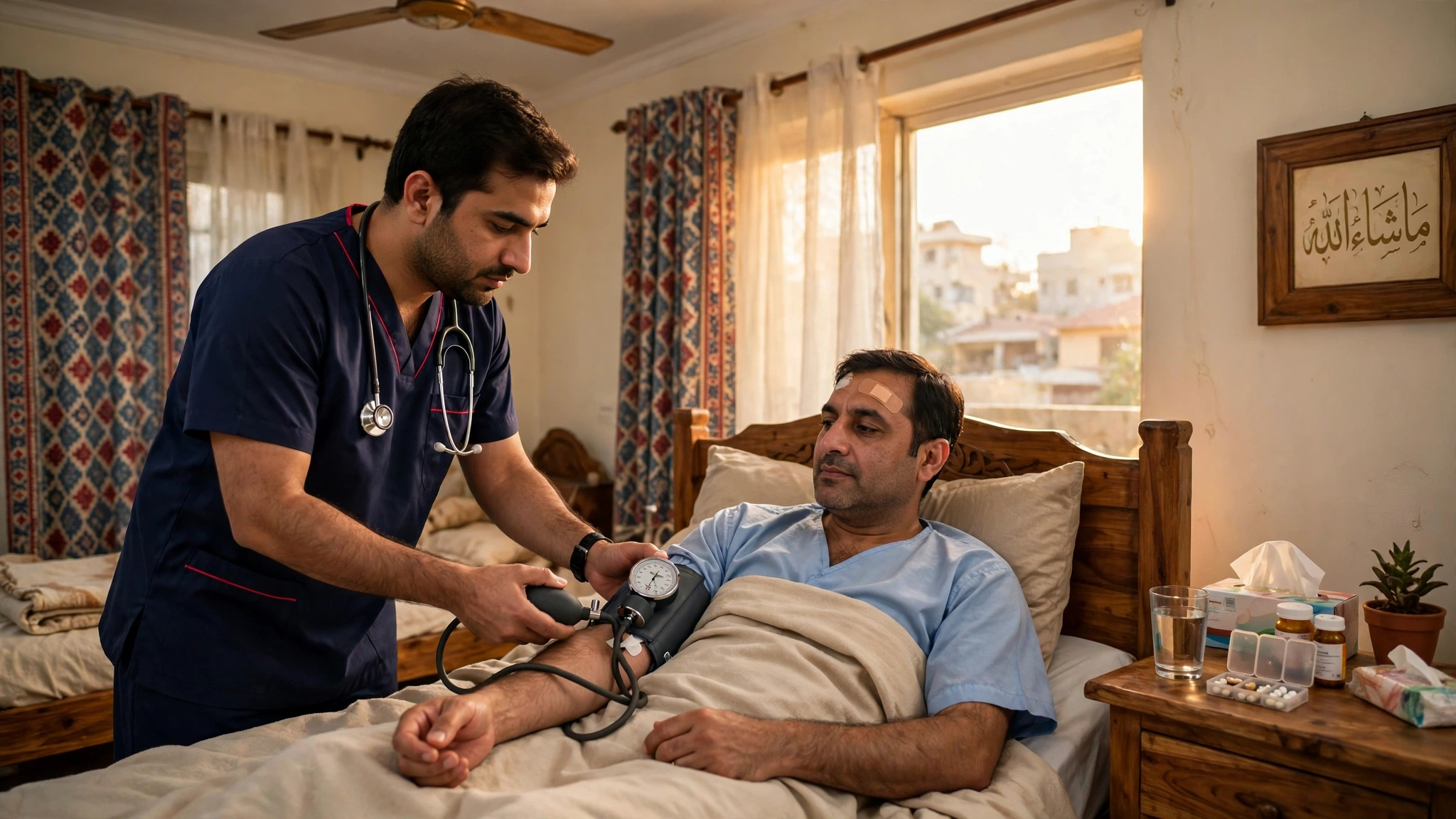
Your Discharge-to-Home Checklist
Before leaving the hospital, make sure you have these sorted:
- Written instructions: medicines with timings, wound care steps, and activity limits. Ask the doctor to explain anything unclear.
- Follow-up date: know exactly when to return for stitch removal or review.
- Prescriptions filled: buy all medicines before reaching home, including pain relief.
- A healing space: a clean, quiet room on the ground floor if stairs are a problem, with the bed at a comfortable height.
- Support arranged: decide who will help with daily care. For many families, a patient attendant in Karachi covers the first critical weeks.
- Emergency numbers: the surgeon’s contact and the hospital’s emergency line, saved in everyone’s phone.
Watching the Wound: What Is Normal and What Is Not
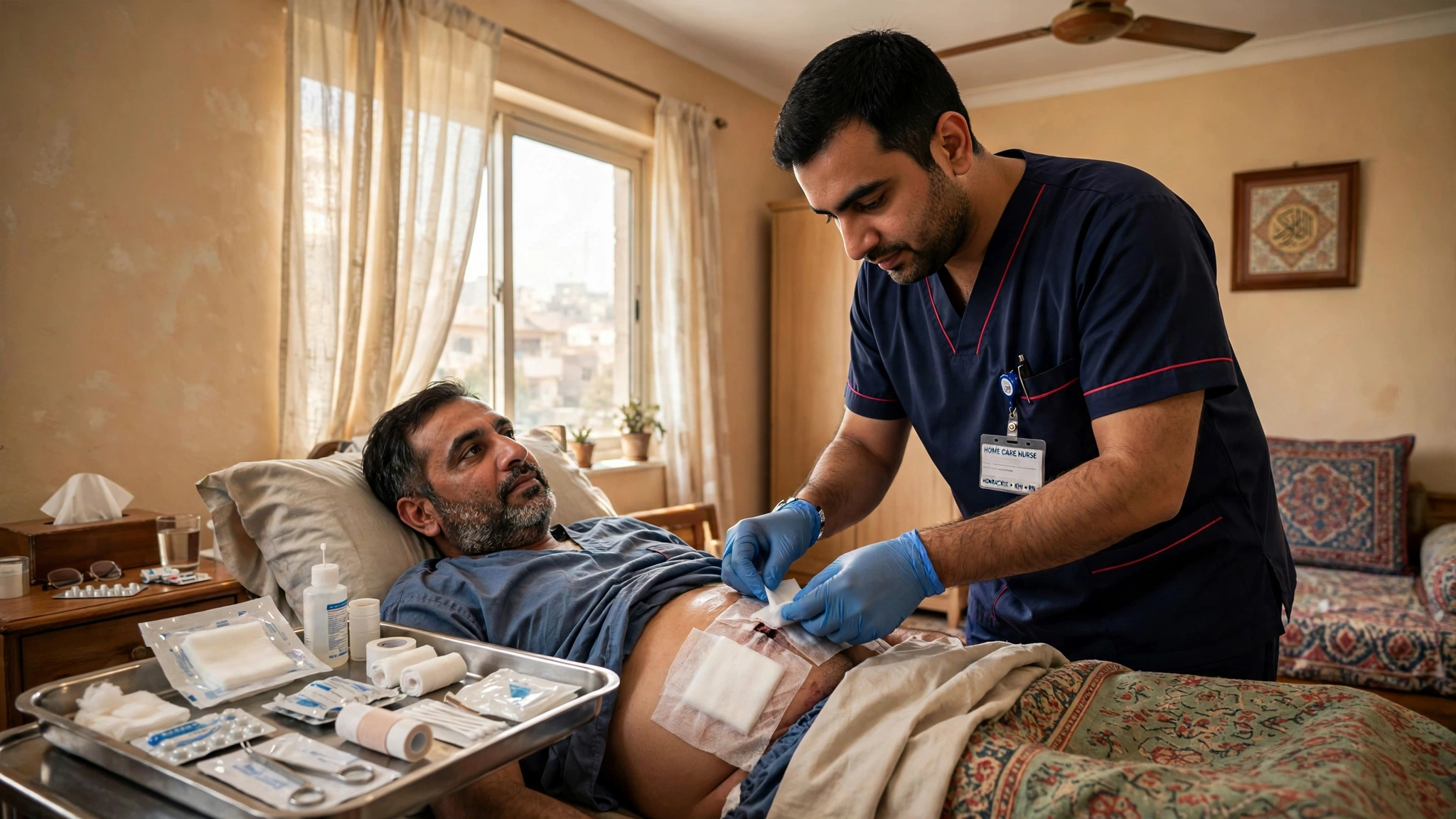
Some redness and mild swelling around the wound in the first few days is normal. Call the doctor if you notice warning signs. These include increasing pain instead of gradual improvement. They also include spreading redness or warmth, or bad-smelling discharge. Also call for fever above 100.4°F, or if the wound opens up.
Dressings should be changed with clean hands and sterile technique, exactly as the hospital demonstrated. If no one at home is confident doing this, arrange a nurse for dressing visits. Do not risk infection. Our home nursing team in Karachi handles post-surgical dressings as a routine service.
Post Surgery Care at Home Karachi: Building the Daily Routine
Good post surgery care at home Karachi healing depends on routine. Medicines must be given on time, especially antibiotics and pain relief. The patient should move as much as the doctor allows. Gentle movement prevents stiffness and blood clots. But rest is equally important.
Nutrition speeds healing. Give protein-rich foods like eggs, lentils, and yogurt. Offer plenty of fluids, and the iron-rich diet the doctor recommends. Keep the wound dry unless the doctor says otherwise. Help the patient with sponge baths until showering is permitted.
A simple daily log helps enormously. Note the temperature, pain level, medicines given, and wound appearance each day. This record is gold for the follow-up visit.
Physiotherapy: The Step Families Often Skip
After orthopedic surgeries like knee or hip replacement, physiotherapy is not optional, it is the treatment. Muscles weaken quickly after surgery, and without guided exercises, stiffness can become permanent. A physiotherapist visiting at home can start gentle exercises within days of discharge. The exercises progress week by week.
Even after abdominal or cardiac surgery, breathing exercises and gradual walking prevent complications. Ask your surgeon when physio should begin. Then arrange physiotherapy at home in Karachi so the patient never misses a session due to travel.
When to Call the Doctor Urgently
Call the surgeon or go to the emergency department if you notice any of these:
- Fever above 101°F that does not come down
- Heavy bleeding from the wound
- Severe or worsening pain
- Swelling or pain in the legs
- Chest pain or trouble breathing
- Confusion or unusual drowsiness
It is always better to call about something small than to ignore something serious.
How Elijah Supports Healing at Home
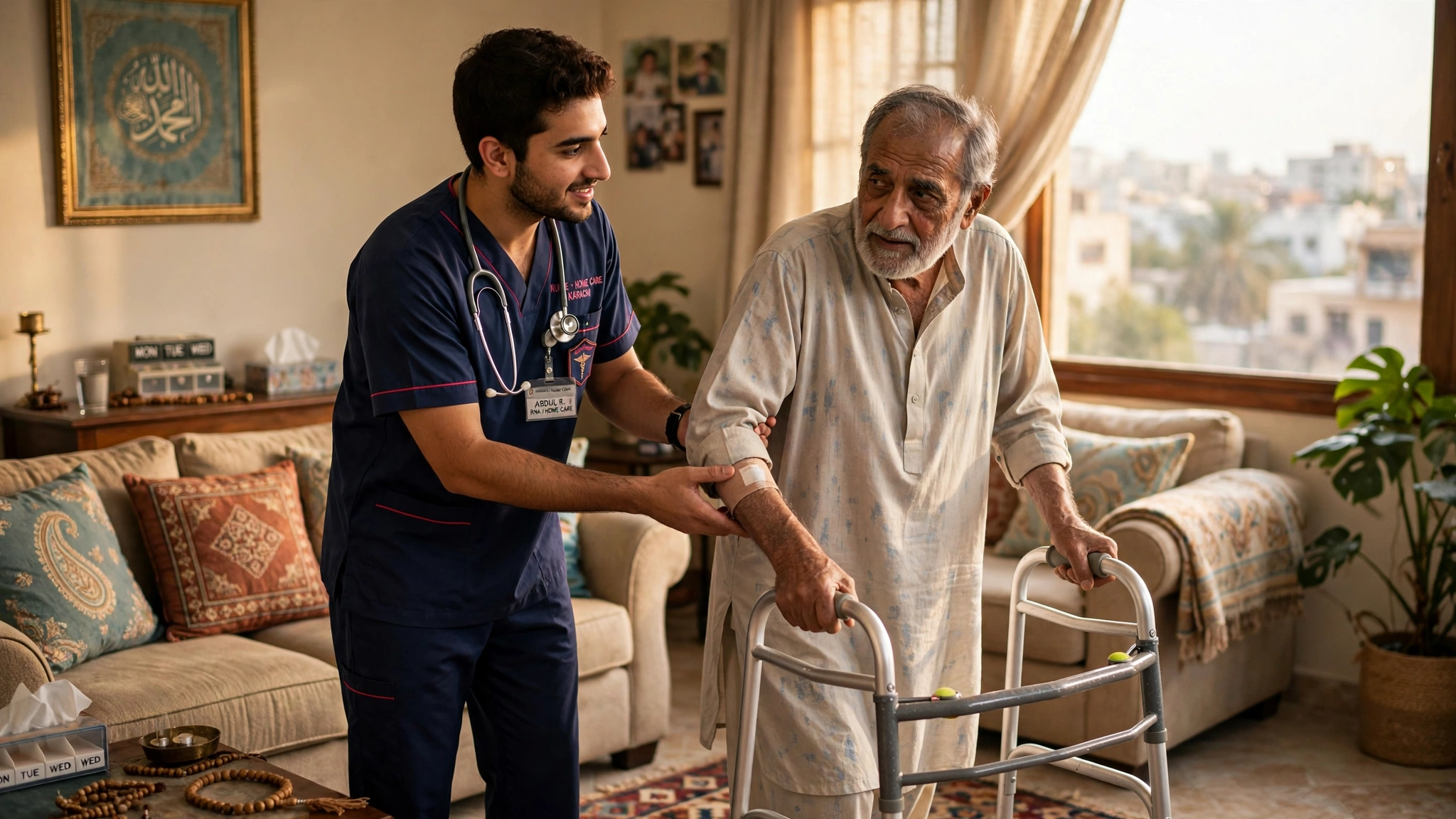
Healing needs different help at different stages. In the first week, most needs are covered by two people. A nurse handles dressings and injections. An attendant helps with daily care. As the wound heals, a physiotherapist takes priority. Our coordinators help families plan this step by step. You get the right care at each stage. Nothing missing, nothing unnecessary.
Healing timeline: what help you may need
| Healing stage | Main focus | Support that helps most |
|---|---|---|
| Weeks 1 to 2 | Wound care, pain control, safe movement | Nurse visits for dressings and medicines, plus an attendant for daily care |
| Weeks 3 to 4 | Stitch removal, more mobility | Attendant for daily help, physiotherapy begins |
| Week 5 onward | Strength, confidence, independence | Physiotherapy sessions with family support |
To discuss your situation, call 0346 2371014 or message us on WhatsApp. You can also book an appointment for a detailed care plan.
Frequently Asked Questions
How long does home recovery take after surgery?
It depends on the surgery. Minor procedures may need a week or two of support. Joint replacements or major abdominal surgery can need six to twelve weeks. The care reduces gradually over time. Your surgeon gives the best estimate.
Can a family member do the wound dressing?
Only if the hospital trained them and they are confident about sterile technique. If there is any doubt, have a nurse do it. An infected wound causes far more suffering and extra hospital visits. It is safer to have a trained nurse handle wound care.
When can the patient start walking after surgery?
Follow your surgeon’s specific advice, since it varies by procedure. In general, gentle movement begins very early, often within a day or two, and increases gradually. A physiotherapist guides this safely.
What food helps healing after surgery?
Protein rebuilds tissue, so include eggs, lentils, chicken, and yogurt. Vitamin C from fruits helps wound healing, and plenty of water prevents constipation from pain medicines. Avoid smoking and alcohol completely.
Do I need a nurse, an attendant, or both?
If the patient needs injections, IV medicines, or wound dressing, you need a nurse. For help with bathing, feeding, and mobility, an attendant is enough. Many families use both in the early weeks.
Recover at Home, With Confidence
Home is where healing happens best. The bed is familiar. Family is nearby. There is no hospital noise. With proper post surgery care at home Karachi families can arrange easily, recovery changes. It becomes a calm, structured process instead of a frightening one. If your loved one is coming home after surgery, call 0346 2371014 or WhatsApp us. Let us help you plan a safe recovery.
Please note: this article shares general information only. Always follow your surgeon’s specific instructions for post-operative care.