Physiotherapy Home Service Near Me Karachi: Your Guide to Convenient, Expert Care at Home
Balancing Safety and Independence: How 12 Hour Nursing Care Transforms Home Recovery
Elijah care
July 18, 2026
Blog
Elijah care
July 18, 2026
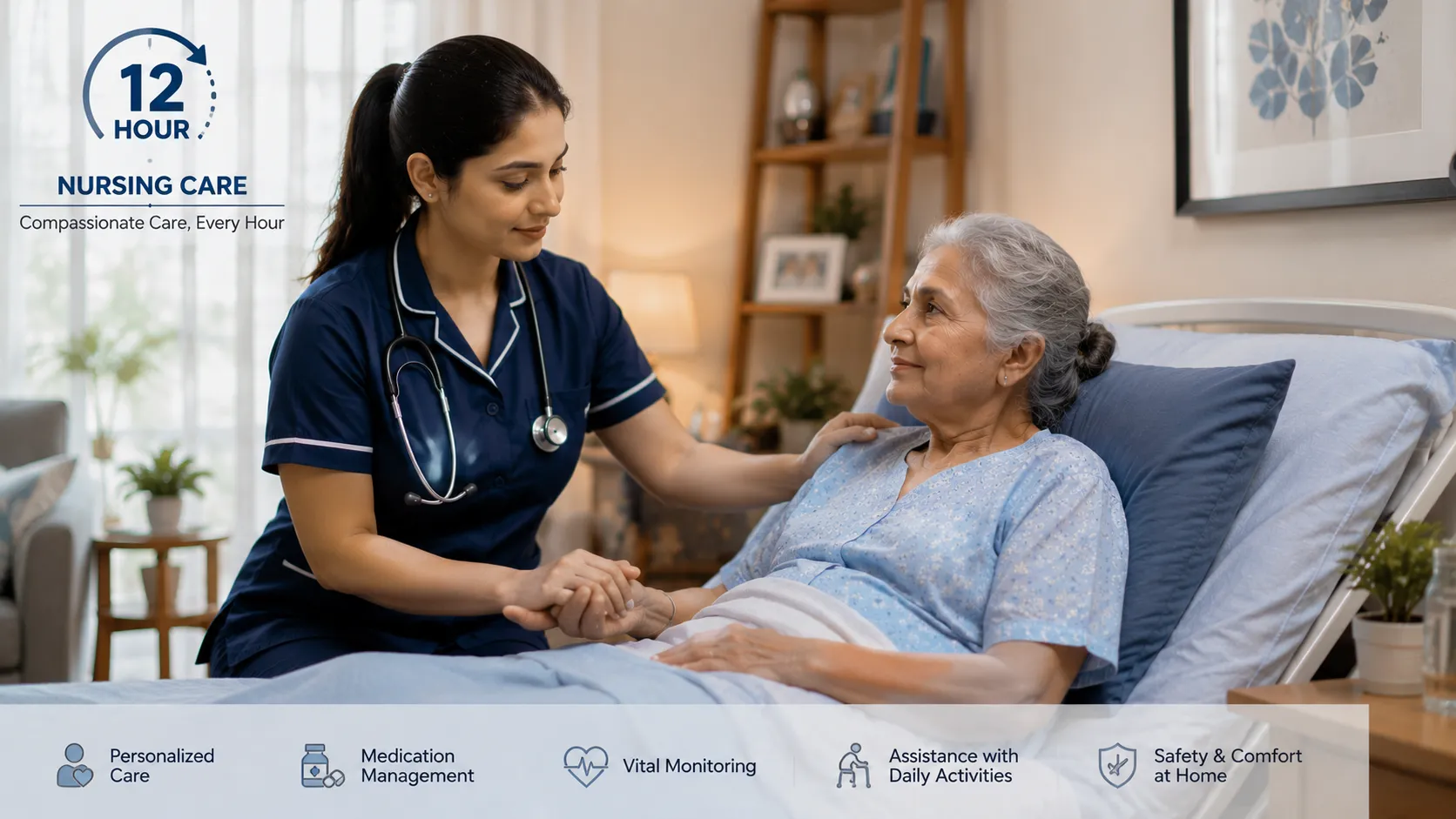
A sudden medical crisis or a progressive chronic diagnosis can instantly turn a family’s world upside down. Consequently, managing complex medical needs at home becomes a stressful, overwhelming challenge for untrained family caregivers.
When a loved one transitions from a hospital to home, securing reliable 12 Hour Nursing Care can be a life-changing decision. This specialized service provides a structured block of professional medical support, ensuring safety during critical day or night hours without the intrusiveness of full-time live-in care.
Ultimately, this targeted approach bridges the gap between clinical hospital environments and comfortable home recovery. By focusing on a dedicated twelve-hour block, families can maintain their daily routines while knowing their loved one is in expert hands.
Not everyone requires round-the-clock medical supervision, yet basic hourly care is often insufficient for complex conditions. Therefore, 12 Hour Nursing Care serves as the ideal middle ground for patients needing intensive, yet non-continuous, clinical management.
Post-surgical patients, for instance, frequently require diligent wound care, pain management, and mobility assistance immediately after discharge. Consequently, having a registered nurse present for half the day ensures these critical recovery protocols are met without delay.
In addition, individuals living with advanced dementia or Parkinson’s disease benefit immensely from structured daytime or overnight shifts. Because these conditions often cause severe sleep disturbances and confusion, specialized nocturnal care keeps patients safe while families sleep.
Furthermore, pediatric patients with complex medical technologies, such as ventilators or feeding tubes, require precise clinical monitoring. As a result, parents can work or rest, confident that a trained professional is managing their child’s delicate health needs.
Families can strategically structure twelve-hour shifts to target the most challenging periods of the day. Specifically, daytime shifts focus heavily on active rehabilitation, therapeutic exercises, and complex medication schedules.
During the day, a nurse can also coordinate with visiting physical therapists and transport patients to vital medical appointments. However, the dynamics shift completely when families opt for overnight care instead.
Overnight shifts are primarily designed to prevent dangerous nighttime wandering and manage sudden clinical crises. For example, patients with respiratory conditions may require frequent airway clearance and oxygen monitoring throughout the night.
Therefore, choosing between day and night coverage depends entirely on the patient’s specific vulnerabilities. By analyzing daily patterns of weakness or confusion, families can deploy professional nursing precisely when it is most needed.
Administering specialized clinical treatments at home requires a level of expertise that goes far beyond basic caregiving. Fortunately, licensed nurses bring advanced clinical skills directly into the patient’s familiar living environment.
For example, intravenous (IV) therapy, complex wound debridement, and catheter management require strict sterile techniques. Consequently, having a professional handle these tasks dramatically lowers the risk of dangerous infections.
In addition, nurses excel at early symptom identification, noticing subtle changes in vital signs before they escalate into emergencies. Thus, timely clinical interventions can be made, preventing stressful and costly trips to the emergency room.
Furthermore, medication reconciliation is a cornerstone of professional home nursing. Because elderly patients are often prescribed multiple conflicting drugs, a nurse’s oversight ensures perfect adherence and prevents adverse drug interactions.
Choosing the right home health agency is a critical process that requires careful research and clear communication. First, families must verify that the agency is fully licensed, bonded, and accredited by national healthcare standards.
Additionally, it is essential to ask about the specific qualifications of the nursing staff. For instance, you should ensure the assigned nurse has direct experience managing your loved one’s specific medical condition.
Furthermore, inquire about the agency’s protocol for unexpected nurse absences or emergencies. A reliable provider should always have a backup nurse on call to ensure continuity of care without interruption.
Finally, request a comprehensive, written care plan that outlines specific clinical goals and daily nursing duties. This document should be updated regularly in consultation with the patient’s primary physicians.
This service encompasses a wide range of clinical duties, including wound care, ventilator management, and IV therapy. Additionally, nurses manage complex medication schedules, monitor vital signs, and assist with therapeutic mobility exercises. Consequently, this comprehensive clinical oversight makes 12 Hour Nursing Care highly adaptable to diverse patient needs.
While 24-hour live-in care involves a caregiver residing in the home full-time, 12-hour care focuses on a single, highly active shift. This means the nurse remains awake, alert, and actively monitoring the patient for the entire twelve hours. Therefore, it is ideal for patients who do not require constant, round-the-clock clinical intervention.
Coverage largely depends on the patient’s specific insurance policy, medical necessity, and location. For instance, private long-term care insurance and certain veterans’ benefits often cover these clinical services. However, traditional Medicare may only cover short-term, intermittent skilled nursing rather than extended daily shifts.
Many families choose to combine professional clinical shifts with care from family members or non-medical home aides. For example, a professional nurse might cover the challenging overnight hours, while family members manage daytime needs. As a result, this collaborative approach ensures comprehensive coverage while keeping overall care costs manageable.
Do not let the physical and emotional demands of medical care overwhelm your home. Our dedicated clinical team is ready to design a customized care plan tailored precisely to your loved one’s unique health needs.