
Imagine the immense relief of bringing your critically ill family member back to their own bed without sacrificing the life-saving medical monitoring they desperately need. When a loved one requires intensive medical attention, hiring an Icu Nurse at Home provides high-tier clinical monitoring, ventilator management, and medication administration in a residential setting. This specialized service allows medically fragile patients to transition safely from the hospital to their own bedrooms. Consequently, families can stay together while maintaining strict clinical protocols.
Transitioning a patient out of the intensive care unit is a delicate process that demands professional supervision. Therefore, having a dedicated specialist on-site ensures that medical emergencies are averted before they even begin.
Key Takeaways
- Hiring an Icu Nurse at Home bridges the gap between clinical necessity and emotional comfort.
- Patients receive highly personalized, one-on-one medical attention that busy hospital wards cannot always guarantee.
- This specialized care significantly reduces the risk of hospital-acquired infections for vulnerable individuals.
- Proper preparation of the physical environment is essential for successful home-based intensive care.
Why Choosing an Icu Nurse at Home Is a Game-Changer for Families
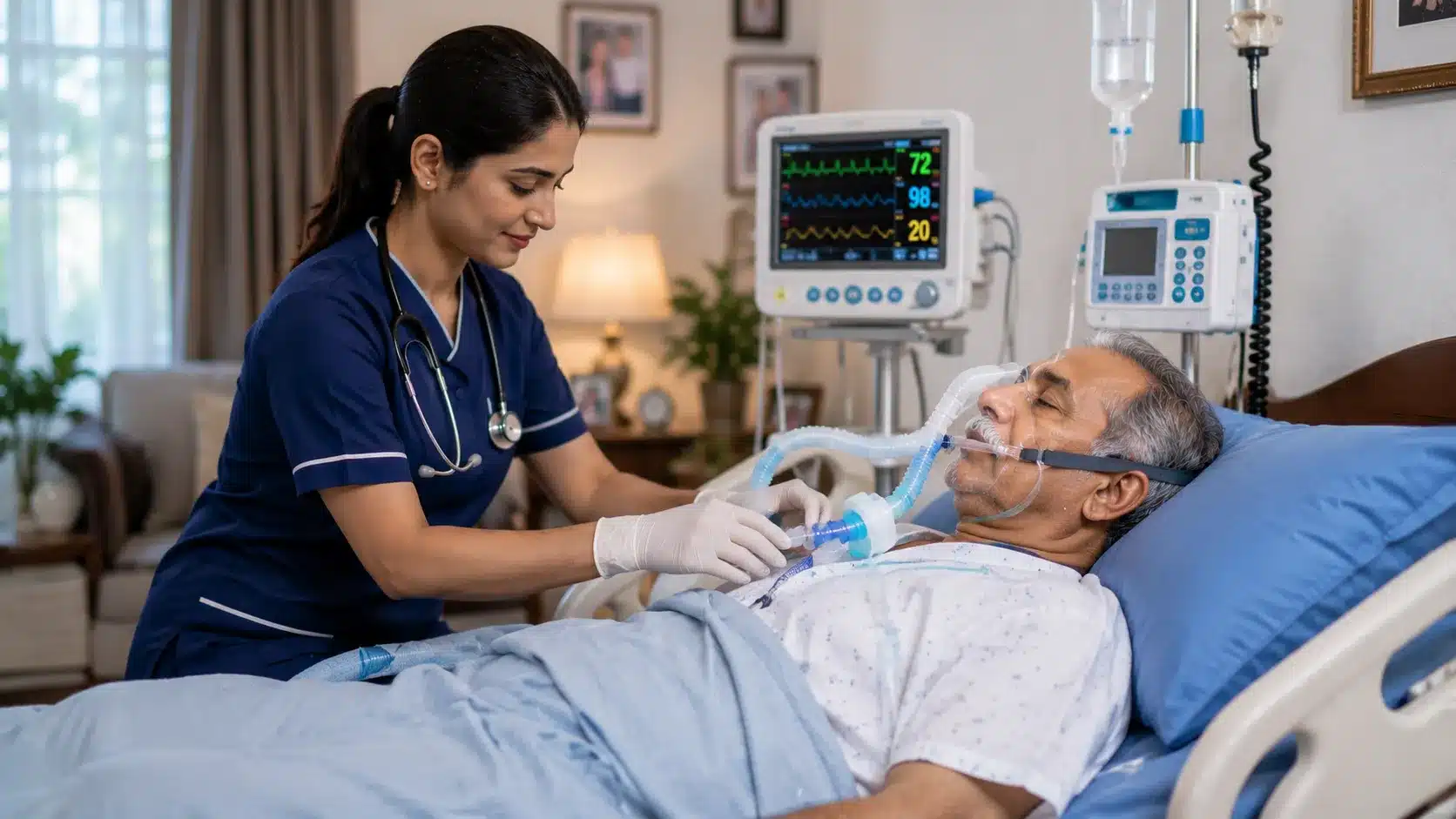
First and foremost, having an ICU Nurse at Home minimizes the risk of hospital-acquired infections. Consequently, the patient heals in a sterile yet comfortable environment that is free from dangerous clinical pathogens.
Furthermore, hospital intensive care units are often loud, bright, and highly stressful. Therefore, transitioning to a quiet home setting promotes faster cognitive recovery and reduces the risk of ICU delirium.
In addition, the emotional support of being surrounded by family is unmatched. As a result, patients experience less anxiety, which directly improves their heart rate and blood pressure stability.
Moreover, the nurse-to-patient ratio in a hospital is rarely one-to-one. However, a private practitioner provides undivided attention to your loved one every single second of their shift.
Essential Clinical Duties of Private Critical Care Providers
Highly trained medical professionals perform a wide array of life-sustaining interventions outside the traditional hospital ward. Specifically, they manage complex medical machinery such as mechanical ventilators, CPAP machines, and oxygen concentrators.
In addition, these specialists are expert in administering complex intravenous medications and managing central venous lines. Consequently, they can handle sudden clinical shifts with absolute precision and speed.
Furthermore, continuous monitoring of vital signs is a core responsibility of the care provider. Therefore, any subtle changes in heart rate, oxygen saturation, or blood pressure are detected and addressed immediately.
Subsequently, the nurse coordinates directly with the primary treating physician. As a result, the medical plan of care is updated seamlessly without requiring frequent, exhausting hospital visits.
Comparing Home-Based Intensive Care to Prolonged Hospitalization
Many families worry about the financial implications of long-term hospital stays. However, investing in an Icu Nurse at Home often proves more cost-effective than keeping a patient in a private hospital room.
In addition, hospital environments can be socially isolating for elderly patients. Therefore, receiving care at home preserves dignity, enhances the quality of life, and boosts morale.
Furthermore, hospital discharge planning can be incredibly complex and stressful. By securing a private critical care nurse, you ensure a seamless transition from the clinical ward to the comfort of your living room.
Consequently, the risk of readmission drops dramatically. This is because the nurse provides proactive care to prevent minor issues from escalating into major medical emergencies.
Preparing Your Living Space for Specialized Medical Care
Preparing your living space for an Icu Nurse at Home requires specific clinical modifications to ensure safety. First, you must select a spacious room with easy access to electricity, natural light, and clean water.
Furthermore, a reliable power backup system is absolutely critical. This ensures that life-support equipment, such as ventilators and suction machines, remains fully operational during sudden blackouts.
In addition, you must maintain a highly sterile environment around the patient’s bed. Consequently, proper sanitization supplies and personal protective equipment must be readily available for the nursing staff.
Therefore, organizing medical supplies in an accessible manner is highly recommended. As a result, the nurse can respond swiftly and efficiently during critical medical moments.
Identifying Who Benefits Most From Residential Intensive Care
Not every patient requires this level of specialized attention. However, individuals recovering from major cardiac, orthopedic, or neurological surgeries benefit immensely from an Icu Nurse at Home.
In addition, patients suffering from chronic respiratory illnesses often require long-term ventilator support. Consequently, they are prime candidates for high-quality residential nursing care.
Furthermore, individuals undergoing palliative or end-of-life care deserve the utmost comfort. Therefore, private critical care nursing allows them to spend their remaining days peacefully and pain-free at home.
As a result, families gain immense peace of mind knowing their loved ones are receiving professional, compassionate care.
Frequently Asked Questions About Home ICU Nursing
How do I choose the right Icu Nurse at Home for my loved one?
When selecting an Icu Nurse at Home, check their clinical certifications and intensive care experience. In addition, ensure they have strong recommendation letters from previous medical institutions to guarantee the highest standard of safety.
Is an Icu Nurse at Home suitable for ventilator-dependent patients?
Yes, highly trained nurses are fully capable of managing mechanical ventilation outside of a hospital. Consequently, they monitor oxygen levels, manage alarms, and perform necessary tracheostomy care around the clock.
What is the typical cost of hiring an Icu Nurse at Home?
The cost varies depending on the level of clinical care required and the shift hours. However, it is generally more affordable than a prolonged stay in a private hospital intensive care unit.
Can an Icu Nurse at Home administer intravenous medications?
Absolutely, these specialized professionals are fully licensed to manage complex IV infusions and central lines. Therefore, they ensure that all critical medications are delivered safely and strictly on schedule.
Secure Professional Critical Care Today
Do not compromise on your loved one’s health and comfort. Contact our medical coordination team today to design a personalized home intensive care plan tailored to your family’s unique needs.