
When a loved one enters a hospital room, the first person they often see is not a doctor or nurse, but a dedicated professional who ensures comfort, safety, and dignity. This professional is frequently a Male Patient Attendant, whose role bridges clinical care and compassionate support. Their presence helps patients feel respected during vulnerable moments.
In today’s fast‑paced healthcare environment, the demand for skilled attendants who can assist with daily living activities while providing emotional reassurance is rising sharply. Hospitals, long‑emotional reassurance is growing rapidly. Facilities rely on these workers to maintain smooth operations and improve patient satisfaction scores. Understanding the scope of their responsibilities clarifies why they are indispensable.
Understanding what a Male Patient Attendant does, the training required, and the settings where they excel helps both job seekers and healthcare administrators make informed decisions. The following sections explore duties, preparation, work settings, challenges, and future prospects in detail.
Key Takeaways
- A Male Patient Attendant provides essential physical and emotional support to patients across various care settings.
- Formal training often includes a CNA‑style program, CPR certification, and ongoing continuing education.
- Common workplaces include hospitals, nursing homes, home health agencies, and rehabilitation centers.
- Challenges such as physical strain and gender stereotypes can be managed with proper technique and professional communication.
- Career advancement paths lead to supervisory roles, specialization, or further nursing education.
Core Responsibilities of a Male Patient Support Professional
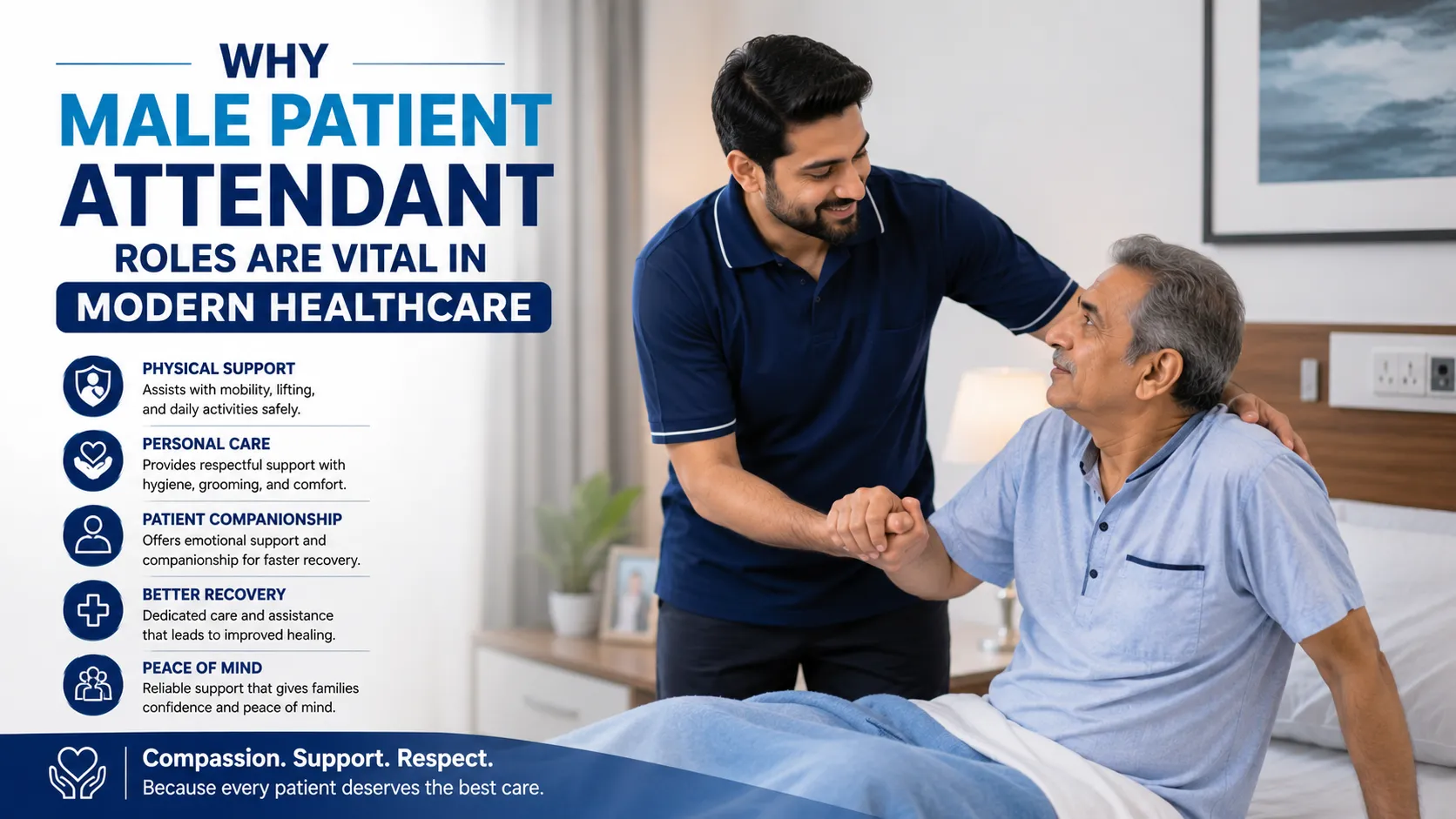
The primary duties of a Male Patient Attendant revolve around assisting patients with basic needs such as bathing, dressing, and grooming. This support preserves dignity while promoting hygiene and comfort. In addition, they help with feeding, toileting, and ensuring that the patient’s environment remains clean and safe.
Furthermore, a Male Patient Attendant often serves as the first point of contact for families seeking updates on a loved one’s condition. Consequently, their role combines physical assistance with attentive communication. They also document observations and report changes to nursing staff promptly.
Direct Patient Care Tasks
Direct patient care tasks include helping individuals move from bed to wheelchair, supporting them during walks, and assisting with range‑of‑motion exercises. These activities require proper body mechanics to prevent injury to both the attendant and the patient. In addition, a Male Patient Attendant must monitor vital signs such as pulse and respiration when instructed by nursing staff.
A Male Patient Attendant is trained to recognize changes in skin integrity that may indicate pressure ulcers. Early detection allows timely intervention and reduces complications. Consequently, vigilant skin checks become a routine part of each shift.
Mobility and Transfer Assistance
Mobility assistance is a core function where a Male Patient Attendant uses gait belts, slide sheets, and lift devices to transfer patients safely. Proper technique reduces the risk of falls and promotes patient independence during rehabilitation. Furthermore, they assist with positioning patients to prevent complications such as respiratory distress.
When a patient requires ambulation training, the attendant provides steady encouragement and monitors fatigue levels. This support builds confidence and accelerates recovery. As a result, patients often achieve mobility milestones sooner than expected.
Emotional Support and Communication
Beyond physical tasks, a Male Patient Attendant provides emotional support by listening to patients’ concerns and offering reassurance. A calm demeanor can alleviate anxiety and foster a sense of security. In addition, they communicate important observations to nurses, ensuring timely interventions.
Consequently, their presence can alleviate anxiety and improve overall patient satisfaction. Families also benefit from clear updates and compassionate interaction. Therefore, the attendant acts as a vital link between the clinical team and the patient’s support network.
Training and Certification Requirements
Becoming a competent Male Patient Attendant typically begins with a high school diploma or equivalent. Many employers prefer candidates who have completed a certified nursing assistant (CNA) program or a similar patient care technician course. Furthermore, specific training modules cover infection control, patient confidentiality, and safe lifting practices.
A Male Patient Attendant often obtains CPR and first‑aid certification as part of their onboarding. These credentials ensure readiness to respond to emergencies. Consequently, employers view certified attendants as more reliable and versatile team members.
Educational Pathways
Community colleges and vocational schools offer short‑term programs that focus on basic patient care skills. These programs usually span 8 to 12 weeks and combine classroom instruction with supervised clinical practice. In addition, online courses provide flexibility for those balancing work or family commitments.
Upon completion, graduates receive a certificate that validates their competence in essential attendant duties. This credential often satisfies minimum hiring requirements. As a result, many entry‑level positions become accessible immediately after training.
On-the-Job Training
Upon hiring, a Male Patient Attendant receives orientation that familiarizes them with facility policies, equipment, and documentation procedures. Experienced staff mentor newcomers, guiding them through real‑world scenarios such as postoperative care. Furthermore, regular competency evaluations ensure that skills remain up to date.
This hands‑on experience builds confidence in using mechanical lifts, managing difficult behaviors, and adapting to diverse patient needs. Consequently, new attendants quickly become productive members of the care team. Ongoing feedback loops help refine technique and improve performance.
Continuing Education
To maintain certification, a Male Patient Attendant may need to complete continuing education units (CEUs) annually. These CEUs cover topics like dementia care, palliative support, and cultural competence. Consequently, ongoing learning enhances both job performance and career advancement prospects.
Facilities often sponsor workshops or provide access to online learning platforms. Participation demonstrates commitment to professional growth. As a result, attendants who pursue CEUs are frequently considered for promotions or specialized assignments.
Work Environments Where Male Patient Support Professionals Thrive
Male Patient Attendants find opportunities across a variety of healthcare settings, each presenting unique challenges and rewards. In addition, the versatility of their skill set allows them to adapt quickly to different patient populations. Understanding these environments helps candidates choose a path that aligns with their interests.
A Male Patient Attendant working in a hospital may assist surgical patients with postoperative mobility. This support includes monitoring wound dressings and helping with ambulation exercises. Consequently, postoperative recovery times often improve when attendants are actively involved.
Hospitals and Acute Care Settings
In acute care hospitals, a Male Patient Attendant often supports patients recovering from surgery, trauma, or serious illness. Their responsibilities include monitoring urine output, assisting with ambulation, and preparing patients for diagnostic tests. Furthermore, they collaborate closely with registered nurses to ensure care plans are followed accurately.
The fast‑paced nature of acute care demands quick thinking and reliable execution. Attendants who master these skills become valuable assets during shift changes and emergencies. Therefore, hospitals frequently seek individuals with strong stamina and attention to detail.
Long‑Term Care Facilities
Within nursing homes and assisted living communities, a Male Patient Attendant helps residents with daily living activities and social engagement. In addition, they participate in recreational programs that promote mental stimulation and community building. Consequently, their consistent presence fosters trust and improves quality of life for long‑term residents.
Building rapport with residents reduces feelings of isolation and loneliness. Attendants often become familiar faces that residents look forward to seeing each day. As a result, satisfaction scores for facilities with dedicated attendants tend to be higher.
Home Health Environments
Home health agencies employ a Male Patient Attendant to provide personalized care in the patient’s residence. This setting requires strong interpersonal skills, as the attendant becomes a regular visitor in the family’s home. Furthermore, they may assist with medication reminders and light housekeeping under the supervision of a registered nurse.
Working in a home environment allows attendants to tailor care to individual routines and preferences. Consequently, patients often experience greater comfort and independence. Families also appreciate the respite and reliable support that a dedicated attendant provides.
Challenges and Strategies for Success
Despite the rewarding nature of the work, a Male Patient Attendant faces several challenges that require resilience and adaptability. In addition, recognizing these challenges early enables the development of effective coping strategies. Addressing these issues proactively leads to longer, more satisfying careers.
A Male Patient Attendant must often manage the physical demands of lifting and repositioning patients throughout a shift. Consequently, proper body mechanics and the use of assistive devices are essential. Facilities that invest in ergonomic training report lower injury rates among their staff.
Physical Demands of the Role
Repeated lifting, bending, and standing for extended periods can lead to musculoskeletal strain if proper techniques are not used. Furthermore, facilities that provide mechanical lift devices and ergonomic training see lower injury rates among attendants. Consequently, ongoing training in safe patient handling is essential for career longevity.
Stretching routines and core‑strengthening exercises can mitigate fatigue and discomfort. Many employers encourage short breaks to promote recovery during long shifts. As a result, attendants who prioritize self‑care sustain higher energy levels and job satisfaction.
Addressing Gender Stereotypes in Healthcare
Some patients or family members may initially express surprise when encountering a Male Patient Attendant in a traditionally female‑dominated role. In addition, open communication and professional demeanor help dispel any misconceptions about competence. Furthermore, showcasing empathy and reliability builds trust regardless of gender.
Education about the attendant’s qualifications and the value they bring to the care team often eases concerns. Over time, consistent performance establishes credibility and fosters positive relationships. Therefore, gender‑based biases tend to diminish with repeated positive interactions.
Maintaining Professional Boundaries
Maintaining appropriate boundaries is crucial, especially when assisting with intimate care tasks such as bathing or toileting. In addition, a Male Patient Attendant follows facility policies regarding chaperones and documentation to protect both parties. Consequently, clear boundaries foster a respectful environment and reduce the risk of misunderstandings.
Training on ethical conduct and privacy laws reinforces the importance of discretion. Attendants who uphold these standards contribute to a culture of safety and respect. As a result, both patients and staff feel more secure in their interactions.
Future Outlook and Career Growth
The healthcare industry’s aging population and increasing focus on patient‑centered care drive steady demand for skilled attendants. In addition, technological advancements in monitoring equipment create new responsibilities for a Male Patient Attendant. Consequently, the role continues to evolve alongside broader healthcare trends.
A Male Patient Attendant who pursues additional certifications, such as in geriatric care or rehabilitation, can qualify for higher‑paying positions. This specialization often leads to greater job satisfaction and professional recognition. Consequently, motivated attendants frequently see accelerated career progression.
Growing Demand for Patient Support Staff
According to labor statistics, employment of patient care technicians is projected to grow faster than the average for all occupations over the next decade. Furthermore, hospitals are expanding their support staff ratios to improve patient satisfaction scores. Consequently, job security remains strong for those entering the field today.
Facilities are also recognizing the value of diverse caregiving teams that include male attendants. This inclusivity enhances patient choice and comfort. As a result, recruitment efforts increasingly target individuals regardless of gender.
Specialization Opportunities
Specialization areas include dementia care, palliative support, and pediatric assistance. In addition, a Male Patient Attendant may choose to focus on wound care or diabetes management under nurse supervision. Furthermore, specialized training often leads to role enrichment and increased job satisfaction.
Pursuing a niche allows attendants to develop expertise that commands higher wages and greater responsibility. Many employers offer tuition reimbursement for relevant certification programs. Consequently, continuous learning becomes a tangible pathway to advancement.
Pathways to Leadership Roles
With experience, a Male Patient Attendant can advance to supervisory positions such as lead attendant or patient care coordinator. In addition, some pursue further education to become licensed practical nurses (LPNs) or registered nurses (RNs). Consequently, the career ladder offers multiple routes for professional growth and higher earnings.
Leadership roles involve scheduling, training new staff, and ensuring quality standards are met. These responsibilities build management skills that are transferable across healthcare sectors. Therefore, ambitious attendants often find long‑term career fulfillment in supervisory or educational positions.
What qualifications are needed to become a Male Patient Attendant?
Most employers require a high school diploma or equivalent. Completion of a certified nursing assistant (CNA) program or a comparable patient care technician course is highly preferred. Additional certifications such as CPR, first‑aid, and specific continuing education units (CEUs) are often required or strongly recommended to maintain competency and meet state regulations.
What are the typical duties of a Male Patient Attendant in a hospital?
In a hospital setting, a Male Patient Attendant assists patients with activities of daily living such as bathing, dressing, grooming, feeding, and toileting. They help with mobility transfers using gait belts or lift devices, monitor basic vital signs, and report changes to nursing staff. Additionally, they provide emotional support, communicate patient concerns to the clinical team, and ensure the patient’s environment remains clean and safe.
How does a Male Patient Attendant differ from a female patient attendant?
The core responsibilities and skill sets are essentially identical regardless of gender. Differences arise mainly from patient or family perceptions, where some individuals may initially feel more comfortable with a attendant of a particular gender due to cultural or personal preferences. Effective communication, professionalism, and empathy allow any attendant to build trust and deliver high‑quality care.
What career advancement opportunities exist for a Male Patient Attendant?
Experienced attendants can move into supervisory roles such as lead attendant or patient care coordinator. Many pursue further education to become licensed practical nurses (LPNs) or registered nurses (RNs). Specialization in areas like dementia care, wound management, or rehabilitation opens doors to higher‑paying, niche positions. Leadership and teaching roles within healthcare organizations are also attainable with additional training and experience.
What challenges might a Male Patient Attendant face on the job?
Common challenges include the physical demands of lifting and repositioning patients, navigating occasional gender‑based stereotypes, and maintaining professional boundaries during intimate care tasks. Proper training in safe patient handling, open communication, and adherence to facility policies help mitigate these issues. Facilities that provide ergonomic equipment and ongoing support see higher job satisfaction and lower turnover among attendants.
Ready to Start Your Career as a Male Patient Attendant?
Explore accredited training programs, connect with local healthcare employers, and take the first step toward a rewarding profession that makes a real difference in patients’ lives.
One Response