
Imagine a loved one recovering from surgery, yet the hospital corridors feel overwhelming and impersonal. Many families in Karachi face this exact dilemma, searching for compassionate, skilled support that fits within the comfort of home. This is where Nurse Aid in Karachi steps in, bridging the gap between clinical care and personal attention.
In the following sections, we will explore what nurse aid entails, why it has become indispensable in Karachi’s fast‑paced urban environment, and how you can select the right provider for your family’s needs. By the end, you’ll have a clear roadmap to ensure quality, safety, and peace of mind.
Key Takeaways
- Nurse aid provides professional medical assistance at home, ranging from wound care to chronic disease management.
- Karachi’s growing elderly population and limited hospital beds drive demand for reliable home‑based nursing.
- Choosing a licensed, experienced nurse aid reduces infection risk and improves recovery outcomes.
- Cost‑effective packages often include medication administration, physiotherapy support, and emotional companionship.
- Always verify credentials, request a care plan, and confirm backup coverage before hiring.
What Is Nurse Aid?
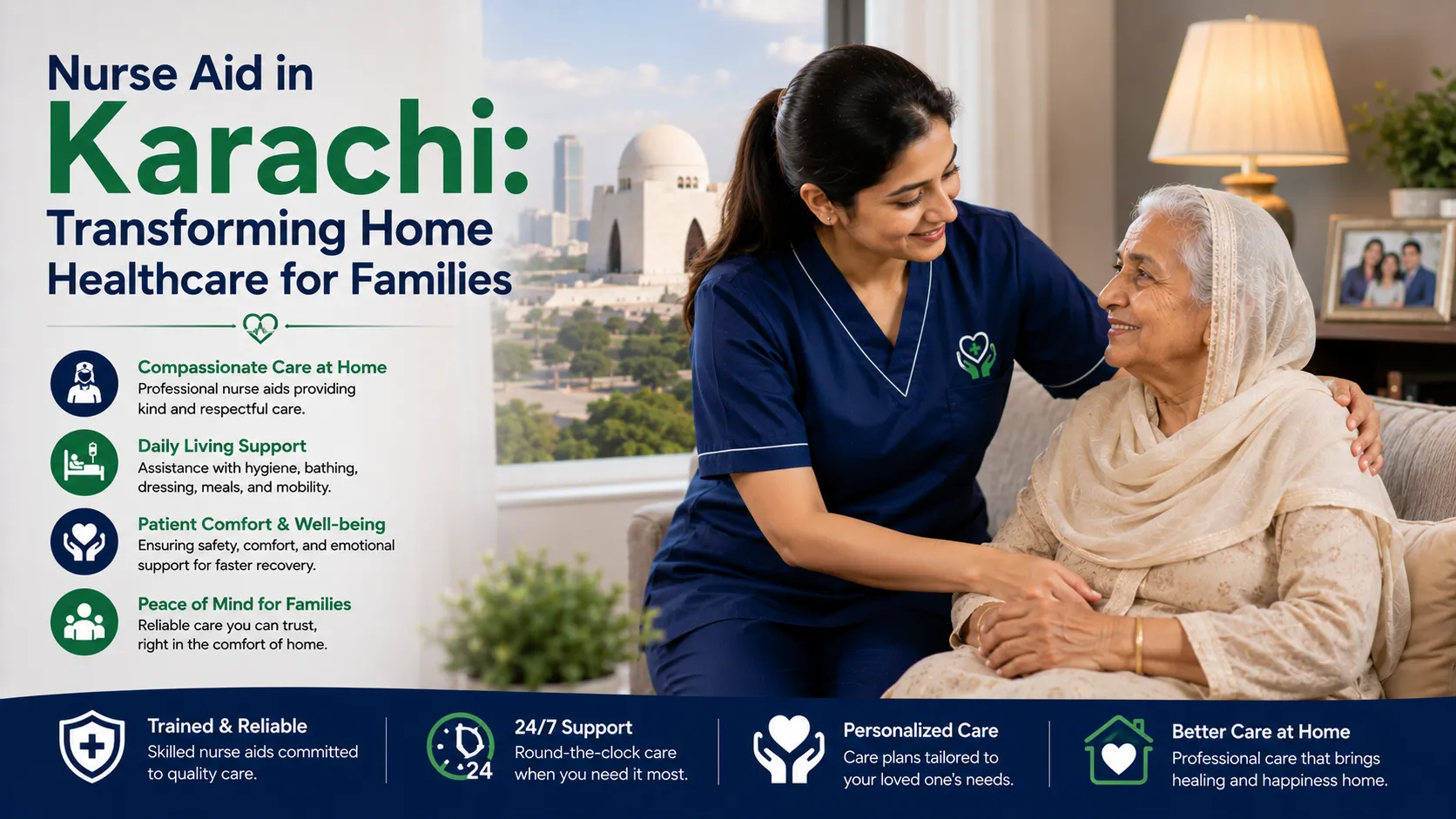
Nurse aid refers to trained healthcare professionals who deliver clinical and supportive services directly at a patient’s residence. Unlike general caregivers, they possess nursing qualifications that enable them to perform tasks such as intravenous therapy, catheter care, and postoperative monitoring. In Karachi, nurse aid services have evolved from basic attendant roles to specialized home‑health units.
Consequently, families receive hospital‑grade attention without the stress of travel or long waiting times. This model not only enhances patient comfort but also frees up valuable inpatient resources for acute cases.
Why Nurse Aid Services Are Essential in Karachi
Karachi’s population exceeds 16 million, and the city’s healthcare infrastructure struggles to keep pace with rising demand. Overcrowded public hospitals and costly private facilities push many households toward alternative solutions. Moreover, the prevalence of chronic conditions like diabetes, hypertension, and kidney disease creates a steady need for ongoing medical supervision.
Furthermore, cultural preferences often favor home‑based care, especially for elderly relatives who value familiarity and family presence. Nurse aid meets this expectation while ensuring that medical standards are not compromised.
Nurse Aid in Karachi
When we speak of Nurse Aid in Karachi, we refer to a growing network of agencies and independent practitioners offering tailored home‑health plans. These providers typically conduct an initial assessment, develop a personalized care schedule, and assign a qualified nurse aid who matches the patient’s medical requirements.
In addition, many agencies now incorporate technology—such as remote vitals monitoring and electronic health records—to improve coordination between the nurse aid, the patient’s physician, and family members. This integration results in faster response times and fewer complications.
Types of Nurse Aid Services Available
Service offerings vary widely, allowing families to select the level of support that fits their situation. Common categories include:
- Basic Assistance: Help with bathing, grooming, medication reminders, and mobility.
- Clinical Care: Wound dressing, IV infusion, catheter management, and vital sign monitoring.
- Specialized Support: Post‑operative care, stroke rehabilitation, palliative care, and dementia supervision.
- Therapeutic Services: Light physiotherapy, occupational therapy guidance, and speech therapy assistance.
Therefore, whether a patient needs short‑term post‑surgical aid or long‑term chronic disease management, Karachi’s nurse aid market can accommodate both.
How to Choose the Right Nurse Aid Provider
Selecting a trustworthy provider requires careful evaluation. Start by verifying that the agency holds a valid license from the Sindh Healthcare Commission. Ask for proof of each nurse aid’s nursing diploma or degree, and inquire about ongoing training programs.
Furthermore, request a detailed care plan that outlines responsibilities, visit frequency, and emergency protocols. Transparent pricing—without hidden charges—should be clarified upfront. Finally, seek references or read online reviews to gauge reliability and compassion.
Benefits of Professional Nurse Aid at Home
Professional nurse aid delivers multiple advantages that extend beyond mere convenience. First, infection rates drop significantly when patients avoid prolonged hospital stays. Second, personalized attention leads to better adherence to medication regimens and therapy exercises.
Moreover, family members experience reduced caregiver burnout, knowing a qualified professional is handling complex medical tasks. Lastly, early detection of complications—such as fever or abnormal wound healing—often prevents costly emergency admissions.
Challenges and Practical Solutions
Despite its benefits, nurse aid in Karachi faces certain obstacles. One major challenge is the uneven distribution of skilled nurses across the city’s districts, leaving some underserved areas with limited options. To address this, several agencies have introduced mobile units that travel to peripheral neighborhoods.
Another issue is the variability in service quality among freelance providers. Implementing standardized accreditation programs and encouraging continuous professional development can help maintain high standards. Additionally, raising public awareness about the difference between a caregiver and a certified nurse aid empowers families to make informed choices.
Real‑Life Examples: How Nurse Aid Changed Lives
Consider the case of Mr. Ahmed, a 68‑year‑old resident of Gulshan‑e‑Iqbal who underwent hip replacement surgery. After discharge, his family hired a nurse aid who visited twice daily for wound care, pain management, and gentle mobility exercises. Within three weeks, Mr. Ahmed regained independent walking, and his family reported heightened confidence in his recovery.
In another scenario, a young mother in Clifton relied on nurse aid for postnatal care and neonatal monitoring. The nurse aid’s expertise in breastfeeding support and infant health checks allowed the mother to focus on bonding rather than worrying about medical details.
These stories illustrate how targeted, professional assistance can transform recovery trajectories and improve overall quality of life.
What qualifications should a nurse aid in Karachi possess?
A competent nurse aid should hold a recognized nursing diploma or degree from an accredited institution, be registered with the Pakistan Nursing Council, and have completed any specialized training relevant to the patient’s condition (e.g., IV therapy, wound care).
How much does nurse aid service typically cost in Karachi?
Costs vary based on the level of care, duration, and agency reputation. Basic assistance may range from PKR 1,200 to PKR 1,800 per shift, while clinical care involving IV administration or wound management can cost between PKR 2,500 and PKR 4,000 per visit. Many agencies offer discounted packages for long‑term contracts.
Yes, many nurse aid providers in Karachi offer 24‑hour live‑in or shift‑based services for patients requiring constant monitoring, such as those with severe mobility limitations, advanced dementia, or postoperative complications.
How can I verify the credibility of a nurse aid agency?
Check for a valid license from the Sindh Healthcare Commission, request copies of staff credentials, read client testimonials, and ask whether the agency conducts background checks and regular performance evaluations. Visiting the agency’s office or speaking directly with a supervisor can also provide insight into their professionalism.
What should be included in a personalized care plan?
A comprehensive care plan should detail the patient’s medical history, specific nursing tasks required, frequency and duration of visits, medication schedule, emergency contact procedures, and goals for recovery or maintenance. It should also outline the nurse aid’s qualifications and any backup coverage arrangements.
Custom Call‑to‑Action
Ready to Bring Expert Care Home?
Ensure your loved ones receive compassionate, professional nurse aid without leaving Karachi. Get a Free Consultation Today
Our team will assess your needs, match you with a qualified nurse aid, and provide a transparent care plan—all within 24 hours.